
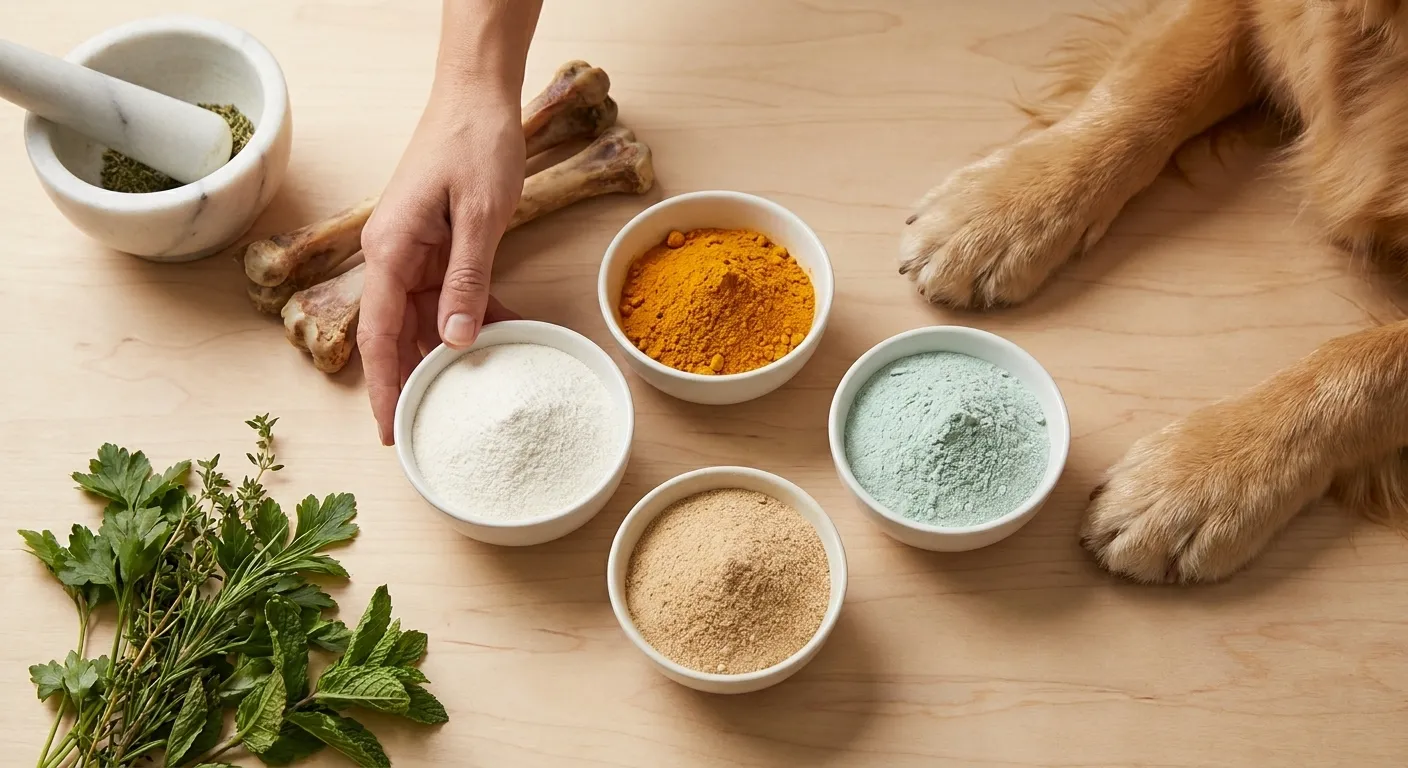
Dog joint supplement ingredients should be discussed in the context of your dog’s assessed mobility and care, rather than chosen from a list of promised mechanisms. Glucosamine, chondroitin, oils, and combined blends need their actual formulation and intended use checked; a category name does not establish a result. This guide gives you a product worksheet and a focused veterinary appointment checklist without recommending a dose or product. This is general educational information, not veterinary advice. Contact your veterinarian about pain, movement changes, or other concerns, and do not delay assessment while testing an ingredient from an online list.
Describe the mobility question before the product
Write what you have noticed during ordinary activity, when it happens, and what else changed. Keep the observation in plain language rather than diagnosing the cause. Ask the clinic which information would help and whether a photo or video is useful. Do not prompt an uncomfortable movement to obtain a demonstration. If the concern is new or worrying, seek guidance rather than waiting to complete a detailed log. The supplement discussion should not obscure the reason you wanted help in the first place.
Bring the dog’s existing care plan, food, medicines, and other products to the conversation. Use exact names and label images rather than describing everything as joint support. Ask what assessment and options are appropriate before adding anything. Age, size, or activity level alone does not provide the full individual context. A practical appointment question is, “Does this particular product have a role in the plan you recommend for our dog?” It keeps the proposed supplement connected to the clinician’s assessment and the actual concern.
Glucosamine and chondroitin: copy, then question
If a product lists glucosamine or chondroitin, copy the exact wording and stated amount into the worksheet. Note what the amount refers to and whether each component is given separately. Do not add labels such as cartilage builder or guaranteed joint repair to your record. Ask for evidence relevant to the proposed use and formulation. A study about a related ingredient or product may not answer the question about the exact item in your hand. Let the veterinarian explain the relevance and limits of the material offered.
Check the complete blend rather than stopping at the headline components. Record the other listed ingredients, directions, manufacturer contact, and any identifying details. If quantities or forms are unclear, request clarification before use. For U.S. background, the FDA explains animal-product regulation according to composition and intended use. Do not confuse that regulatory context or a marketing quality statement with proof of effectiveness for your dog. Keep each question visible in the clinical discussion.
Oils and other named components: avoid a category shortcut
For an oil-based item, note the source and any named components the label actually quantifies. Ask whether a stated amount refers to the whole oil or a particular component before comparing packages. If a joint blend lists MSM, a mussel-derived component, turmeric, or another ingredient, record what is provided without assigning a therapeutic effect from the name. This is a label-reading task, not an evidence ranking. The veterinarian can assess whether the proposed formulation and use are relevant to the individual plan.
Ask the manufacturer for the original support behind a claimed result where needed, then bring that material to the clinician. Do not treat a long ingredient list as evidence that all the components work together as promised. If the product claims a special combination, ask what research concerns that combination rather than several separate ingredients. Keep testimonials apart from clinical sources. An owner’s reported improvement can raise a question without establishing what caused it or predicting how your dog will respond.
Compare actual products with a consistent worksheet
Use columns for exact name, formulation, intended species, listed components and quantities, directions, storage, manufacturer contact, and unanswered questions. Include the package version or other identifying information where supplied. Keep the main food and all other products in the same appointment record so the proposed addition is not considered in isolation. Do not fill missing amounts with estimates from another listing. If a seller’s page and package disagree, resolve the difference before assuming either one represents the current item.
Ask what any manufacturing test or certification statement covers and where documentation can be read. Keep product identity, manufacturing information, and evidence for a mobility claim separate. A badge can answer a narrower question than the benefit you are interested in. Avoid a ranking based on broad adjectives such as advanced or natural. A meaningful comparison should help the veterinarian inspect the actual options and explain which questions matter, not suggest that the most reassuring package must be the best choice.
Clarify the recommendation and household instructions
If a product is recommended, ask for the exact item, instructions, purpose, and review plan. Clarify the formulation and directions before buying a replacement or another format. Do not assume a powder, liquid, and chew with similar branding have interchangeable administration. Ask about storage, the measuring method if relevant, and what to do if the dog refuses it or consumes an uncertain amount. Keep those answers with the original label. Household reminders should follow the plan rather than create an independent schedule.
Coordinate anyone who cares for the dog with one current record. Identify who checks the instructions and records completion. Mark uncertainty honestly instead of giving an additional amount to compensate for an unclear checkbox. If travel or a sitter changes the routine, arrange a handover with the actual product, directions, and veterinary contact. Do not double, combine, or alter administration based on convenience or another owner’s routine. A manageable plan begins with instructions that the household understands and knows how to question.
Monitor what the veterinary team actually asks for
Ask which observations are useful and when they should be discussed. Record ordinary activity and context without declaring that a joint has been repaired or an ingredient caused a change. Note other care and routine changes during the same period. If videos are requested, collect them in a way the clinic considers appropriate and safe. Your home record helps communication; it does not turn a supplement trial into a controlled experiment. Keep the limits of any apparent before-and-after comparison visible.
Ask what would prompt contact sooner than the planned review, and keep the contact route accessible. Report concerns or practical difficulties rather than concealing them to make the routine look consistent. Do not wait for a promised response time from a testimonial when the dog needs assessment. AVMA’s pet-care information is a professional starting point for further owner reading, alongside the individual advice from your veterinary team. The continuing decision should come from that reviewed plan and the concerns you report.
Revisit the choice when the product or situation changes
At review, bring the product information, instructions, observation record, and questions. Ask whether to continue, change, or stop and update the household care sheet accordingly. If the formulation changes or another care instruction is introduced, check how that affects the supplement plan. Do not let an automatic reorder decide the dog’s continuing care. Keep a record of the current decision and retire old instructions that could confuse another caregiver. A clearly reviewed product choice is more useful than an expanding list of joint-related ingredients.
Your next step
Describe the movement concern, copy the complete label, and ask your veterinarian about the proposed formulation and evidence. Dog joint supplement ingredients should remain part of an individual care discussion, with no guarantee attached to a name or blend. Follow the assessed plan and review instructions, and use accurate notes to make the next conversation easier.