
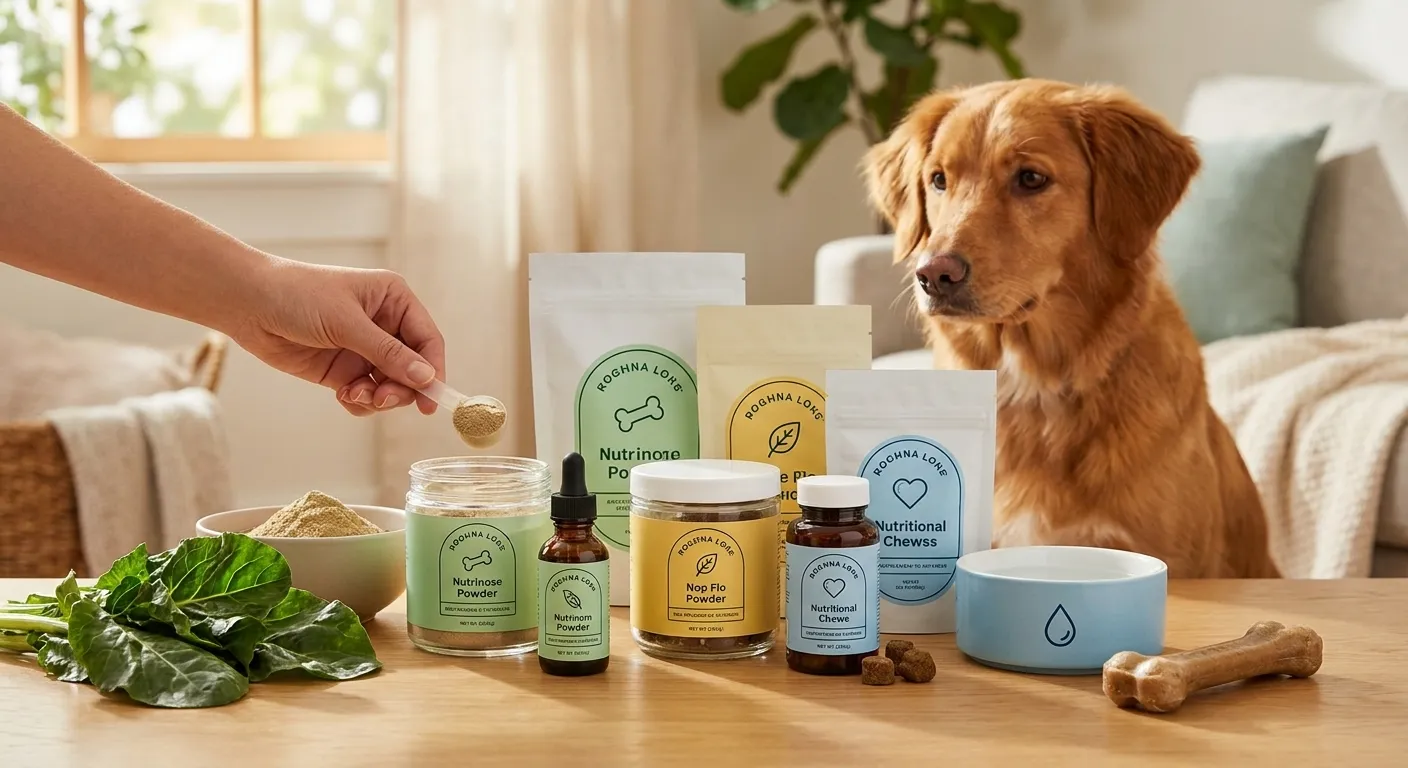
Essential pet supplements is a search phrase, not a ready-made shopping list for every dog or cat. The useful question is which product, if any, your veterinarian recommends for a specific purpose within your companion’s feeding and care plan. This guide helps you compare supplement categories and prepare that conversation without assigning benefits or doses from a label alone. It does not rank products or claim that adding several categories creates complete wellness. This is general educational information, not veterinary advice. Ask your veterinary team about individual needs and check the actual formulation before making any addition or substitution.
Define the need before naming the category
Write why you are considering a supplement. Is there an assessed concern, a question about the diet, or a claim in an advertisement that caught your attention? Keep those starting points distinct. A broad wish to improve wellness does not identify the appropriate item or show that one is needed. Bring the question to the veterinarian with the current food and product information. Ask what assessment or clarification comes first. The conversation may lead to a reviewed feeding instruction or another care option rather than a supplement.
List the full diet, treats, medicines, and other products the pet receives. Use actual labels and note the amounts you know, marking uncertainty as uncertainty. Discuss the FDA’s explanation of complete and balanced pet food when learning how to read the main food’s nutritional adequacy statement. The label context does not replace the individual assessment. It helps you ask a clearer question about the whole plan instead of assuming that unfamiliar ingredient names indicate a gap that needs filling.
Multivitamins and minerals: ask what the addition is for
If a multivitamin or mineral product is proposed, identify the exact formulation and listed amounts. Ask which purpose it is intended to serve and what information supports that use in your pet. Do not presume that a combination of many named nutrients is more appropriate than a narrowly considered option. Keep the food and other products in the discussion so the veterinarian can review the overall plan. A general label description cannot decide whether the addition belongs in the routine for your companion.
Create a comparison note with product name, species, ingredients, stated quantities, directions, and manufacturer contact. If the information is incomplete, request clarification rather than substituting a similar-looking item. Ask whether the proposed use requires monitoring and when it should be reviewed. Do not use a human product or infer administration from another animal’s directions without veterinary approval. The category name tells you where to start the question; the actual decision concerns a particular product and animal.
Omega products: keep the source and formulation visible
When considering a product described as omega oil or fatty-acid support, copy the actual ingredient and quantity information rather than reducing everything to “fish oil.” Ask the veterinarian what the proposed formulation is and why it is being considered. Check whether the listed amount refers to the whole oil or a named component, and ask for clarification if the label is unclear. This guide does not assign a therapeutic benefit or dose. It provides a way to make the product information more useful in the clinical discussion.
Ask about storage and administration for the specific item if it is recommended. Keep any measuring instructions with the original package and do not improvise an amount from a household utensil. Record what should be monitored and what to do about refusal or uncertainty. If the seller changes the formulation or you cannot obtain the same item, return to the veterinary team before treating a different product as equivalent. A familiar category name does not establish that two labels describe the same plan.
Digestive products: ask about the actual concern
A product marketed with probiotics, prebiotics, enzymes, or fiber should prompt questions about the particular animal and intended use, not an assumption that every digestive concern needs the same addition. Describe what you have observed and any recent feeding or care changes to the veterinarian. Ask whether assessment is needed before a product discussion. Keep the proposed ingredient list and formulation available. Do not attempt to resolve a worrying symptom by testing a collection of products from a general guide.
For any recommended item, ask which product details matter to the decision and whether the evidence concerns that formulation. A research claim about a named component is not automatically a finding about every mixture using the same category word. Ask the clinician to explain relevant limits and the review process. Keep the plan connected to the main diet and other treatments. If the label is vague, request the missing information instead of assuming it must contain the ingredient or amount you expected from an online description.
Joint products: discuss mobility before a supplement list
Describe ordinary movement changes or the reason a joint-related product interests you, and seek veterinary assessment where appropriate. Record observations without prompting an uncomfortable activity to test the animal. Bring the label of any proposed product rather than selecting by a list of fashionable ingredients. Ask what role, if any, it has in the individual care plan and what other options should be discussed. A supplement category should not replace a conversation about pain, movement, or a new concern.
If the product lists ingredients such as glucosamine, chondroitin, or several combined components, keep their exact names and amounts in the note. Do not label them a guaranteed cartilage builder, pain solution, or prevention plan from the package alone. Ask for evidence relevant to the intended use and formulation. The FDA’s animal-product regulation explanation provides U.S. background about composition and intended use. Regulatory context is a separate question from whether an item is clinically useful for your companion.
Calming products: seek an assessed behavior plan
For an item marketed for calm or stress support, describe the situation you want help with. Note when the behavior occurs, what else is happening, and any other concerns, then ask the veterinary team about assessment and options. Do not diagnose the situation from a product label. Ask whether professional behavior support is appropriate and how any recommended steps fit together. The plan should explain what you are addressing and when to seek further help, rather than promising that a calming category solves every difficult situation.
If a product is recommended, obtain clear directions and a review plan. Ask what should prompt contact sooner and how to handle missed, refused, or uncertain administration. Keep the household record accurate and avoid changing several products independently. Do not set a response timeline from an owner’s testimonial or assume the absence of an immediate change tells you what to do next. A useful next action comes from the veterinary instructions and the observations you report, with the individual animal’s context kept visible.
Choose one clear decision instead of stacking categories
At the end of the discussion, summarize which item, if any, was recommended, for what purpose, with which instructions and review point. Keep unresolved questions open and do not add products to cover every category in this article. If the decision is to make no supplement addition, record what care or feeding guidance was agreed instead. If an item is recommended, confirm the exact formulation before ordering. Household reminders and renewals should follow the reviewed plan, not create a reason to continue automatically.
Your next step
Bring the whole feeding record and one specific product question to your veterinary team. Compare categories by their intended purpose and actual labels, then follow the individual recommendation and review plan. Essential pet supplements should never become a universal promise or an automatic shopping list. Let the companion’s assessed needs determine whether any addition belongs in the routine.