
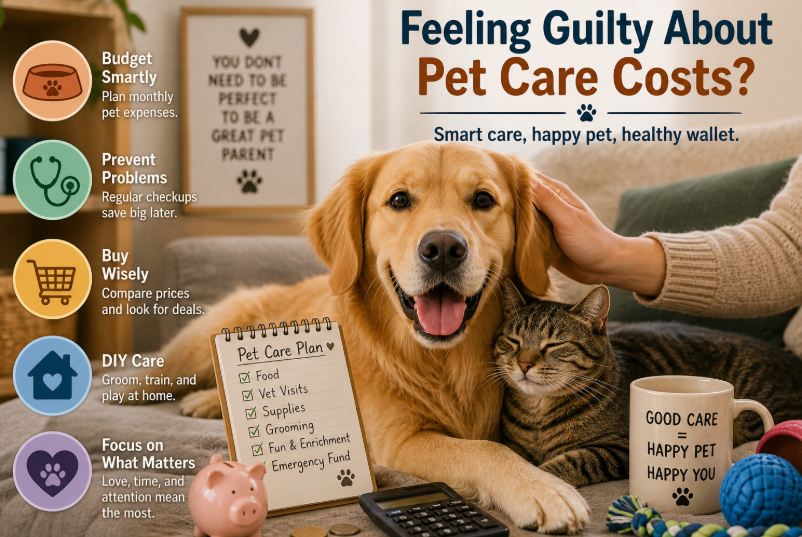
Pet care cost guilt is something many owners quietly struggle with, especially when trying to balance finances and responsibility. You want to give your pet the best life possible, yet rising costs can create stress and doubt. While these feelings are understandable, they often come from unrealistic expectations rather than actual shortcomings. Therefore, learning how to manage both your budget and your mindset can help you feel more confident and in control.
Most pets do not need luxury-level care to thrive. Instead, they need consistency, attention, and thoughtful choices. When you approach decisions with clarity, pet care cost guilt becomes easier to manage. Over time, you realize that smart care matters far more than expensive options.
Why Pet Expenses Feel Overwhelming
Understanding the root of pet care cost guilt helps you approach it more rationally. Costs can quickly add up, especially when you include food, grooming, vet visits, and unexpected emergencies. Because of this, many owners feel pressure to spend more than they comfortably can.
Additionally, social expectations often play a role. Seeing others invest heavily in premium products or services may create a sense of comparison. However, these choices do not always reflect necessity. Therefore, comparing your situation to others often leads to unnecessary stress.
Financial uncertainty can also amplify these feelings. When money is tight, even essential expenses can feel overwhelming. Recognizing this helps you separate emotional pressure from practical reality.
Shifting Your Perspective on Care
One of the most effective ways to reduce pet care cost guilt is by changing how you define good care. Instead of focusing on how much you spend, focus on how consistent and thoughtful your care is. Your pet values safety, attention, and routine more than expensive items.
It helps to remember that pets respond to your presence and engagement. Simple actions like regular walks, playtime, and affection often matter more than costly extras. When you shift your focus to these fundamentals, guilt begins to fade.
Additionally, acknowledging what you already provide builds confidence. Food, shelter, and attention are the core of good care. Recognizing these basics helps you see that you are already meeting important needs.
Creating A Realistic Budget
A practical budget is essential for managing pet care cost guilt. Instead of reacting to expenses, planning ahead allows you to feel more in control. Start by identifying essential costs such as food, routine vet care, and basic supplies.
Once you understand these core expenses, you can allocate funds accordingly. This prevents overspending and reduces financial stress. Additionally, setting aside a small emergency fund can help you prepare for unexpected situations.
Flexibility is also important. Some months may require more spending than others. By planning for these variations, you create a more stable financial approach. Over time, this reduces anxiety and builds confidence.
Prioritizing What Truly Matters
Not all expenses carry the same value, which is why prioritization is key to reducing pet care cost guilt. Focus on essentials that directly impact your pet’s health and well-being. These include proper nutrition, routine checkups, and basic hygiene.
Non-essential items, such as luxury accessories or premium extras, can be optional. While they may be appealing, they are not necessary for a happy pet. Therefore, choosing carefully helps you avoid unnecessary spending.
By focusing on priorities, you make decisions with purpose. This clarity helps you feel more confident and reduces second-guessing.
Finding Affordable Alternatives
There are many ways to provide quality care without overspending. Exploring affordable options can significantly reduce pet care cost guilt while maintaining high standards.
For example, preparing simple enrichment activities at home can replace expensive toys. Basic grooming tasks can often be done yourself with minimal tools. Additionally, buying supplies in bulk or during sales can help lower costs.
Community resources may also be available. Local clinics, shelters, or pet groups sometimes offer discounted services. Taking advantage of these options can make a big difference over time.
Avoiding Emotional Spending
Emotional spending often contributes to pet care cost guilt. When you feel uncertain, you may buy extra items to compensate. However, this approach rarely solves the underlying issue.
Instead, pause before making purchases. Ask yourself whether the item truly benefits your pet or simply eases your concern. This reflection helps you make more intentional decisions.
Creating a list of necessary items can also help. Sticking to this list prevents impulse buying and keeps your spending aligned with your priorities.
Building Confidence Through Routine
Consistency plays a major role in reducing pet care cost guilt. When you follow a daily routine, you rely less on last-minute decisions. This structure helps you feel more organized and in control.
Simple habits, such as regular feeding, exercise, and observation, create stability. These actions support your pet’s health without requiring additional expenses. Over time, consistency builds confidence in your care.
Additionally, routines help you notice changes early. This allows you to address potential issues before they become costly problems. As a result, you save money while maintaining better health outcomes.
Letting Go Of Comparison
Comparison is one of the biggest drivers of pet care cost guilt. Seeing others spend more can create unnecessary pressure. However, every pet and owner situation is different.
Focusing on your own circumstances helps you make decisions that fit your life. What works for someone else may not be practical or necessary for you. Therefore, avoiding comparison allows you to stay grounded.
Your pet does not measure care based on cost. They respond to consistency, attention, and comfort. Keeping this perspective helps reduce external pressure.
Balancing Care And Financial Well-Being
Your financial health is just as important as your pet’s well-being. Straining your budget to meet unrealistic standards can create long-term stress. A balanced approach ensures that both you and your pet are supported.
Setting boundaries around spending helps maintain this balance. It allows you to provide consistent care without compromising your financial stability. Over time, this approach reduces pet care cost guilt and creates a more sustainable routine.
Being mindful of both needs ensures that you can continue providing care without burnout or anxiety.
Recognizing That You Are Doing Enough
One of the most important steps in overcoming pet care cost guilt is accepting that you are doing enough. Doubt often comes from unrealistic expectations rather than actual shortcomings.
Take a moment to consider what you already provide. Your pet has food, shelter, attention, and care. These essentials form the foundation of a happy life.
Celebrating small successes can also shift your mindset. Each day of consistent care is a positive step. Recognizing these efforts helps replace guilt with confidence.
Long-Term Peace Of Mind
As you apply these strategies, pet care cost guilt becomes easier to manage. You begin to see that thoughtful decisions matter more than expensive ones. This realization creates a sense of peace and clarity.
Over time, your routine becomes more efficient and less stressful. You gain confidence in your ability to provide good care within your means. This balance leads to a more enjoyable experience for both you and your pet.
Conclusion
Pet care cost guilt is a common challenge, but it does not have to control your decisions. By focusing on essentials, creating a realistic budget, and avoiding unnecessary comparison, you can provide excellent care without financial strain. Your pet values consistency, attention, and comfort more than expensive extras.
With a balanced approach, you can reduce stress and build confidence in your choices. Over time, this leads to a healthier, happier relationship with your pet and greater peace of mind in your daily life.
FAQ
- Why do I feel guilty about spending less on my pet?
Guilt often comes from comparison and unrealistic expectations rather than actual care quality. - Can I still provide good care on a budget?
Yes, focusing on essentials like nutrition and routine care ensures your pet stays healthy. - How can I reduce unnecessary pet expenses?
Create a budget, avoid impulse purchases, and look for affordable alternatives. - Is it okay to skip luxury pet products?
Yes, most luxury items are optional and not required for your pet’s well-being. - How do I feel more confident in my pet care decisions?
Focus on consistency, observe your pet’s health, and trust the care you already provide.