
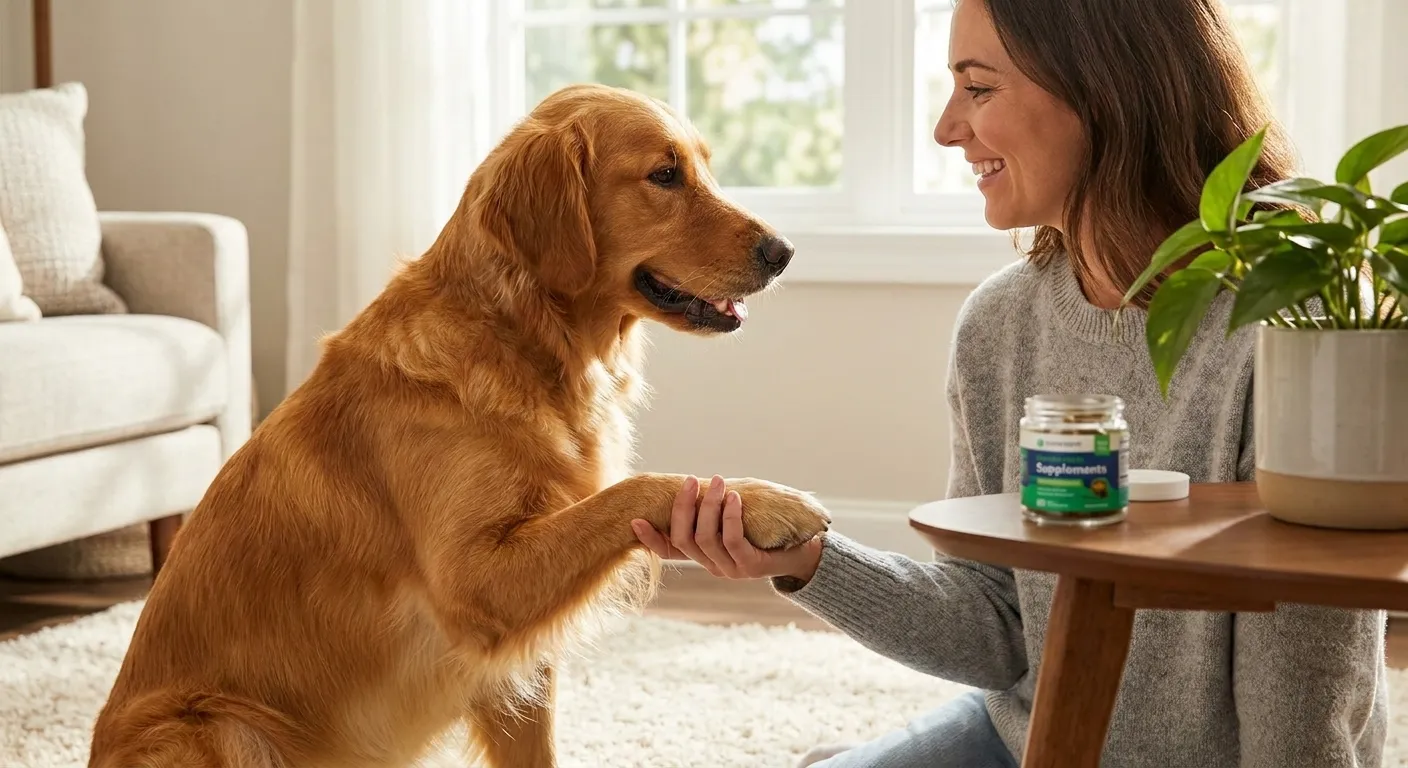
Pet health success stories can be reassuring, but a testimonial is not enough to decide whether a supplement belongs in your own pet’s care. A useful account identifies what was observed, what else changed, and what remains uncertain. This guide helps you evaluate such stories and keep a clearer record if your veterinarian recommends a product. No named pet transformation is presented here as a verified case, and the sample notes are hypothetical. This is general educational information, not veterinary advice. Ask your veterinarian about your pet’s individual needs rather than selecting treatment from a compelling before-and-after story.
Ask what the story actually establishes
Read the account once for the observation and once for the explanation. “The owner noticed a change” and “the supplement caused the change” are different statements. Write down which one the story can actually support. Is there a dated record, a veterinarian’s assessment, or only a general description? If the source provides no way to establish the account, treat it as unverified rather than completing the missing details yourself. You can respect an owner’s experience without accepting every conclusion attributed to it.
Check who is telling the story and why it appears in that location. It may be an owner account, a seller’s marketing page, or a piece sponsored by a brand. Look for any relationship or incentive disclosed by the publisher. Do not assume a polished photograph proves the sequence of events. Ask whether the owner consented to publication and whether important context was removed. If you are sharing a story yourself, obtain consent and keep the difference between the person’s words and your interpretation clear.
Build a timeline before judging the outcome
List the starting concern, the date a product was introduced if known, and the dates of the observations. Add other changes: food, medication, activity, routine, environment, or veterinary care. Keep unknown dates marked as unknown. A hypothetical record might say, “New food and a prescribed care plan began during the same period as the supplement.” That note does not identify which change mattered. It shows why a single-product explanation needs more support. Avoid turning an approximate recollection into an exact response timeline.
Ask whether the account describes the ordinary days as well as the most striking improvement. Were there setbacks, unanswered questions, or reasons the plan changed? A complete account need not be dramatic. For your own pet, dated notes can help you discuss what happened with the veterinarian without relying on a memory of the best day. Do not use recordkeeping to postpone contacting the clinic about a concern. Ask the veterinary team what information they want and how to contact them if the situation changes.
Keep a personal observation sheet with neutral wording
Choose the observation categories with your veterinarian. Write what you can see in ordinary language rather than diagnosing from a behavior. A note can identify the activity attempted, the context, and your observation without saying a joint was repaired or a digestive condition cured. Keep the product name, label photographs, and any instructions provided by the clinic alongside the sheet. Do not invent a rating scale and then present it as a validated clinical measurement. A personal record is a communication tool with limits.
Separate observation from conclusion in two columns. In the first, record what happened. In the second, write your question: “Could this relate to the recent change?” or “Should we review the plan?” If photos or video are useful, ask the clinic how to collect them safely without prompting a painful activity or distress. Label the date and context and share through an appropriate channel. The point is to help the veterinary team understand the situation, not to create a convincing promotional montage.
Check the product behind the story
Obtain the actual label and formulation rather than relying on a nickname in the testimonial. Record the intended species, listed ingredients, amounts where stated, directions, manufacturer contact, and any relevant identifying information. If the story uses a different formulation from the one currently sold, do not assume they are interchangeable. Bring the details to your veterinarian along with the pet’s existing food, treats, medicines, and other products. The question is whether the specific proposed item fits your pet’s plan, not whether the brand has a persuasive review.
Use the FDA’s explanation of animal food and drug regulation to understand the relevant U.S. framework. It explains that products marketed as animal dietary supplements are handled according to composition and intended use rather than the human supplement category. This is regulatory context, not proof that a particular product is effective for your pet. Avoid treating a phrase such as natural, registered, or manufactured in a facility as a substitute for evidence supporting the claimed outcome.
Bring the story to a veterinary conversation
Tell your veterinarian what appealed to you about the account and what question you want answered. “This owner describes easier movement; is there anything relevant to our current plan?” is a more usable opening than asking to copy the story’s entire routine. Share the source and product label, and ask about the evidence for the particular use. Let the clinician assess your pet’s situation and the appropriate options. Do not replace an existing treatment or feeding plan because a testimonial makes another approach sound simpler.
Ask what improvement, if any, the team would monitor, when the plan should be reviewed, and what would prompt a call sooner. Request instructions for administration, missed doses, refusal, and possible problems if a product is recommended. Keep those answers in writing where possible. A veterinary recommendation is a plan for the individual animal, not a guarantee that the story’s outcome will recur. Your record should capture what was actually agreed rather than adding extra steps from comments under the testimonial.
Write an honest account if you later share your experience
Describe your pet’s story with consent from anyone whose material is included and with private details handled thoughtfully. State which observations are yours, what other care occurred, and what you cannot determine. Avoid naming a product as the cause of an outcome unless that conclusion is properly supported. If the account is sponsored or otherwise connected with a seller, disclose the relationship as applicable. Do not fabricate a quotation from the veterinarian or imply professional endorsement from the fact that the clinic discussed a product with you.
Keep the story useful by showing the process: why you sought advice, what information you brought, and how the agreed plan was reviewed. Do not turn the account into a schedule for other owners to copy. Remove dosage suggestions or sweeping claims of safety for every animal. A reader should understand that their pet needs its own assessment. If your experience changes after publication, update the account so it does not preserve only the optimistic early version. Accurate context is more valuable than a tidy transformation narrative.
Choose reliable next questions instead of a promised result
When comparing stories, write the questions they leave unanswered and choose which matter to your pet. You may need to ask about the diagnosis, the specific formulation, or the evidence for the proposed use. AVMA’s pet-care resources provide a professional starting point for owner information, alongside your own veterinary team. A testimonial can prompt a conversation, but it should not end the investigation. Keep the next action specific enough to complete without buying a collection of products first.
Your next step
Select one story and separate its observations from its causal claims. Check the timeline and label, then bring the unresolved question to your veterinarian. Pet health success stories are most useful when they encourage clearer care discussions and honest recordkeeping. Let your pet’s assessed needs guide the decision, with no assumption that another animal’s reported experience predicts your own.