Pet owner guilt anxiety is something many people experience, even if they rarely talk about it. Whether you worry about not spending enough time with your pet or question your daily decisions, these feelings can quietly build over time. While caring deeply for your pet is a positive thing, constant worry can take away from the joy of companionship. Therefore, learning how to manage these emotions is essential for both your well-being and your pet’s happiness.
Many pet owners hold themselves to extremely high standards. They want to provide the best food, the most exercise, and constant attention. However, real life often gets in the way. Work, responsibilities, and unexpected situations can make perfect care impossible. As a result, pet owner guilt anxiety begins to grow, even when your pet is actually doing well.
Understanding Where the Feelings Come From
To cope effectively, it helps to understand the root of pet owner guilt anxiety. In many cases, it stems from love and responsibility. You care deeply, so naturally, you want to do everything right. However, unrealistic expectations can turn that care into pressure.
Social media can also play a role. Seeing perfectly curated images of pets with endless attention and luxury care may create comparison. Yet, these snapshots rarely show the full reality. Therefore, comparing your daily routine to these highlights can lead to unnecessary stress.
Additionally, past experiences or advice from others may influence your mindset. If you’ve been told certain standards are essential, you may feel like you’re falling short. Recognizing these influences helps you separate fact from perception.
Shifting Your Perspective
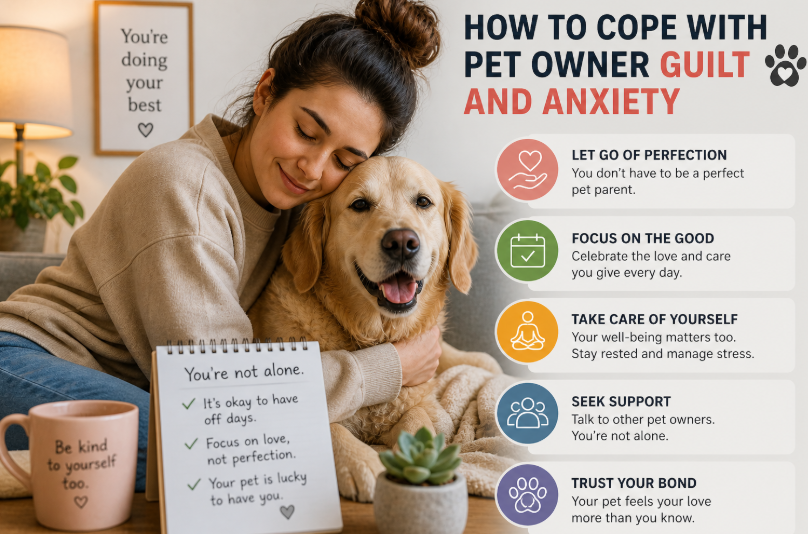
One of the most powerful ways to manage pet owner guilt anxiety is by changing how you view your role. Instead of aiming for perfection, focus on consistency and care. Your pet does not need a flawless routine. They need love, safety, and basic needs met.
It’s helpful to remind yourself that good care is not about doing everything perfectly every day. Rather, it’s about showing up consistently over time. Small, regular actions often matter more than occasional big efforts.
Also, consider how your pet responds to you. Most pets show happiness through simple signs like wagging tails, relaxed behavior, and excitement when you’re around. These signals often reflect contentment, even if your routine isn’t perfect.
Building a Balanced Routine
Creating a simple, realistic routine can reduce pet owner guilt anxiety significantly. When you have a structure in place, you spend less time worrying about whether you’re doing enough. Instead, you can focus on following a plan that works for both you and your pet.
Start by identifying essential daily activities, such as feeding, exercise, and interaction. Then, schedule them in a way that fits your lifestyle. For example, a short walk in the morning and some playtime in the evening may be enough for many pets.
Flexibility is also important. Some days will not go as planned, and that’s okay. Adjusting your routine without guilt helps you stay consistent over the long term.
Letting Go of Perfection
Perfectionism often fuels pet owner guilt anxiety. You may feel that every detail needs to be ideal, from diet to enrichment activities. However, this mindset can become exhausting and unrealistic.
Instead, aim for “good enough” care. This does not mean lowering standards drastically. Rather, it means accepting that minor imperfections are normal. Your pet will not suffer because of occasional changes or missed activities.
Additionally, allowing yourself to make mistakes creates room for growth. Every pet owner learns through experience, and no one gets everything right from the start. Accepting this truth can ease a lot of internal pressure.
Recognizing What Your Pet Truly Needs
Sometimes, pet owner guilt anxiety comes from overestimating what pets actually require. While enrichment and attention are important, most pets thrive on simple, consistent care.
Basic needs include proper nutrition, regular exercise, mental stimulation, and a safe environment. When these are met, your pet is likely doing well. Extra activities can enhance their life, but they are not always necessary every single day.
Observing your pet’s behavior can provide reassurance. A relaxed, engaged pet is usually a sign that their needs are being met. Therefore, trust what you see rather than what you assume.
Managing Stress and Emotional Overload
Pet owner guilt anxiety can become overwhelming if left unchecked. Therefore, managing your own stress is just as important as caring for your pet. When you feel calmer, you make better decisions and enjoy your time together more.
Taking short breaks, practicing mindfulness, or simply stepping back from constant worry can help reset your mindset. Additionally, talking to other pet owners can provide perspective. You’ll often find that others share similar concerns.
Limiting exposure to unrealistic expectations also helps. Focus on reliable sources of information rather than overwhelming yourself with conflicting advice.
Strengthening Your Bond Without Pressure
A strong bond with your pet does not require constant activity. In fact, quiet moments can be just as meaningful. Sitting together, gentle petting, or simply being present can strengthen your connection.
These moments help reduce pet owner guilt anxiety because they shift your focus from “doing more” to “being present.” Your pet values your presence more than elaborate routines.
Consistency in these simple interactions builds trust and comfort. Over time, this strengthens your relationship in a natural and sustainable way.
Accepting That You Are Doing Enough
One of the hardest parts of managing pet owner guilt anxiety is accepting that you are already doing enough. Doubt can make even good care feel insufficient. However, recognizing your efforts is an important step toward peace of mind.
Think about everything you already provide: food, shelter, care, and companionship. These are the foundations of a happy pet. While improvements are always possible, your current efforts matter.
It’s also helpful to celebrate small wins. Whether it’s a successful walk or a calm day at home, these moments reflect positive care. Acknowledging them can shift your mindset toward appreciation rather than worry.
Long-Term Emotional Balance
Over time, managing pet owner guilt anxiety becomes easier with practice. The more you focus on realistic expectations, the less power guilt has over your thoughts. This creates a healthier emotional balance.
Your pet benefits from this as well. A calm and confident owner creates a more relaxed environment. This leads to better interactions and a stronger bond.
Developing this balance does not happen overnight. However, consistent effort and self-awareness make a significant difference. Gradually, you’ll find that worry fades and enjoyment takes its place.
Conclusion
Pet owner guilt anxiety is a common experience, but it does not have to control your daily life. By understanding its causes, adjusting your expectations, and focusing on consistent care, you can reduce stress and build confidence. Your pet does not need perfection—they need your presence, care, and attention.
As you let go of unnecessary pressure, you create space for a more enjoyable and fulfilling relationship. In the end, a calm and balanced approach benefits both you and your pet, leading to a happier and healthier life together.
FAQ
- Why do I feel guilty even when my pet seems happy?
Guilt often comes from high expectations rather than your pet’s actual condition or needs. - Is it normal to worry about pet care daily?
Yes, occasional concern is normal, but constant worry may need adjustment in perspective. - How can I reduce stress related to caring for my pet?
Focus on routines, realistic goals, and simple interactions that build confidence. - Can comparing my pet care to others cause anxiety?
Yes, comparisons often create unrealistic standards and unnecessary pressure. - What is the best way to feel more confident as a pet owner?
Trust your efforts, observe your pet’s behavior, and focus on consistent, balanced care.