
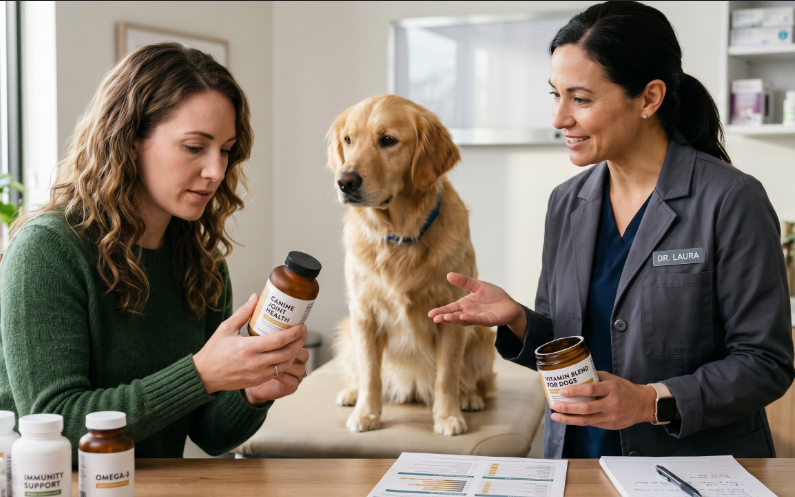
Making the right decision for your pet’s health can feel overwhelming, especially when it comes to supplements. A proper pet supplements safety check becomes essential when you are faced with countless products promising better energy, stronger joints, and improved digestion. While these claims can sound appealing, not all supplements are created with your pet’s safety in mind. Therefore, understanding how to evaluate them carefully can protect your pet from unnecessary risks and ensure that what you give truly supports their health.
Pet owners often assume that if a supplement is available on the market, it must be safe. However, this is not always the case. Unlike medications, many supplements are not strictly regulated in the same way. As a result, some products may contain questionable ingredients, inaccurate labeling, or unverified claims. That is why performing a thorough pet supplements safety check is not just helpful, it is necessary for responsible pet care.
Why Safety Matters More Than Promises
It is easy to get drawn in by bold promises on packaging. Words like “natural,” “premium,” and “vet-approved” appear frequently and can quickly build trust. However, these terms do not always guarantee quality or safety. In fact, some of them have no strict definition, which allows brands to use them loosely.
When you focus on a pet supplements safety check, you shift your attention from marketing language to actual substance. Instead of asking what a product claims to do, you begin asking how it works and whether it is proven to be safe. This approach reduces the risk of giving your pet something harmful or ineffective. Moreover, it encourages more thoughtful decision-making, which ultimately benefits your pet’s long-term health.
Another important point is that pets react differently to supplements. What works for one animal may not work for another. Because of this, safety should always come before potential benefits. By prioritizing safety, you ensure that any supplement you choose supports your pet without causing unintended harm.
Understanding Ingredients And Labels
One of the most critical steps in a pet supplements safety check is examining the ingredient list. High-quality supplements clearly list all active and inactive ingredients, along with their amounts. If a product hides behind vague terms like “proprietary blend,” it becomes difficult to know exactly what your pet is consuming.
Transparency is a strong indicator of trustworthiness. When brands openly share ingredient details, it shows confidence in their formulation. On the other hand, unclear labeling can signal potential issues. Therefore, always take the time to read labels carefully before making a decision.
It is also important to recognize harmful or unnecessary additives. Artificial colors, preservatives, and fillers may not provide any health benefits. In some cases, they can even trigger allergies or digestive issues. By including label review in your pet supplements safety check, you can avoid these unwanted components and choose cleaner, safer options.
The Role Of Scientific Evidence
Scientific research plays a major role in determining whether a supplement is safe and effective. During a pet supplements safety check, look for products that are supported by credible studies or clinical trials. Reliable brands often provide references or summaries of research to support their claims.
However, not all studies are equal. Independent, peer-reviewed research carries more weight than internal studies conducted by the brand itself. Additionally, the size and quality of the study matter. A small or poorly designed study may not provide reliable conclusions.
While it may take extra effort to verify research, doing so can significantly improve your confidence in a product. It helps you move beyond marketing claims and focus on evidence-based choices. As a result, your pet supplements safety check becomes more accurate and effective.
Consulting Your Veterinarian
Even the most thorough pet supplements safety check should include professional input. Veterinarians understand your pet’s medical history, dietary needs, and potential sensitivities. Because of this, they can provide personalized advice that generic product information cannot.
Before introducing any new supplement, it is wise to consult your vet. They can help you determine whether the supplement is necessary and safe for your pet. In some cases, they may recommend alternative options that better suit your pet’s condition.
Additionally, veterinarians can identify potential interactions with medications or existing health issues. This is especially important for older pets or those with chronic conditions. By combining your own research with expert guidance, your pet supplements safety check becomes far more reliable.
Red Flags To Watch Out For
Certain warning signs can help you identify unsafe or unreliable supplements. For instance, exaggerated claims such as “miracle cure” or “instant results” should raise concerns. These statements often lack scientific backing and are designed to attract attention rather than provide accurate information.
Another red flag is the absence of third-party testing. Reputable brands often have their products tested by independent organizations to verify quality and safety. If this information is missing, it may indicate a lack of accountability.
Pricing can also be misleading. While expensive products are not always better, extremely cheap supplements may cut corners in quality. Therefore, balancing cost with quality is an important part of a pet supplements safety check. Paying attention to these warning signs can help you avoid risky products and make safer choices.
Balancing Benefits And Risks
Every supplement comes with potential benefits and risks. A well-rounded pet supplements safety check considers both sides before making a decision. While a product may offer certain health advantages, it is important to evaluate whether those benefits outweigh any potential risks.
For example, a joint supplement may improve mobility but could also cause digestive issues in some pets. Understanding these trade-offs allows you to make informed decisions. It also helps you monitor your pet more effectively after introducing a new supplement.
Gradual introduction is another useful strategy. By starting with a small dose, you can observe how your pet പ്രതികs before increasing the amount. This approach minimizes risk and provides valuable insights into how the supplement affects your pet. In this way, your pet supplements safety check extends beyond research and into real-world observation.
Building A Safe Supplement Routine
Creating a safe routine involves more than choosing the right product. It also requires consistency, monitoring, and regular evaluation. As part of your pet supplements safety check, keep track of any changes in your pet’s behavior, energy levels, or overall health.
Regular check-ins with your veterinarian can help you adjust the routine as needed. Over time, your pet’s needs may change, and their supplement plan should evolve accordingly. Staying flexible ensures that your approach remains effective and safe.
It is also helpful to avoid over-supplementation. Giving multiple supplements at once can increase the risk of interactions or excessive intake of certain nutrients. Therefore, simplicity is often the best approach. By focusing on essential supplements and monitoring their effects, you can maintain a balanced and safe routine.
Conclusion
A thoughtful pet supplements safety check is one of the most important steps you can take to protect your pet’s health. While the market is filled with promising products, not all of them meet the standards needed for safety and effectiveness. By focusing on ingredients, evidence, and professional guidance, you can make decisions that truly benefit your pet.
Ultimately, your goal should be to support your pet’s well-being without taking unnecessary risks. By staying informed and cautious, you can navigate the world of supplements with confidence. A careful approach not only ensures safety but also strengthens the trust you build with your pet’s care routine.
FAQ
- How do I know if a supplement is safe for my pet?
Check ingredients, research backing, and consult your veterinarian before introducing any new product. - Are natural supplements always safer for pets?
Not necessarily. Natural ingredients can still cause reactions, so proper evaluation is essential. - Can I give multiple supplements at the same time?
It depends on your pet’s needs. However, combining supplements without guidance can increase risks. - What should I do if my pet reacts badly to a supplement?
Stop using it immediately and contact your veterinarian for advice. - How often should I review my pet’s supplement routine?
Regular reviews every few months help ensure the routine remains safe and effective.