
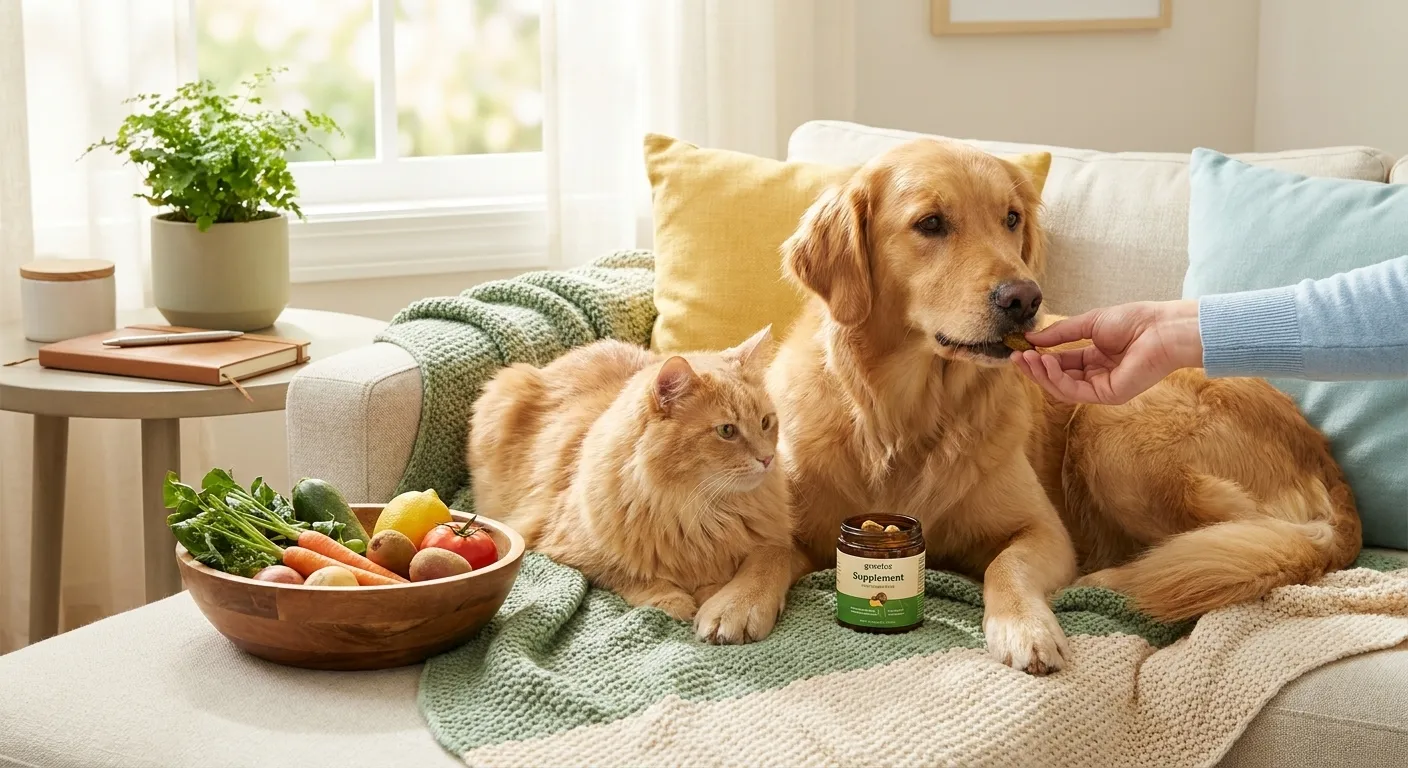
Preventative pet wellness is a practical care-planning task, not a promise that a particular supplement can prevent illness. A useful plan keeps feeding, routine veterinary discussions, everyday observations, and agreed household tasks organized around the individual pet. This guide helps you prepare that plan with your veterinary team and keep it current. It does not provide a universal screening schedule, diet prescription, or supplement list. This is general educational information, not veterinary advice. Ask your veterinarian which care steps suit your companion’s age, species, health, and circumstances, and contact the clinic about concerns rather than waiting for a routine review.
Start with a care summary the clinic can use
Create a short record of the pet’s identity, known health history, current veterinary contacts, food, medicines, and other products. Use the actual names and labels rather than relying on memory. Add any recent change you want to discuss, with dates where known. Keep uncertain details marked as questions. If records are split across clinics, ask how to obtain and share the relevant information. The summary should help the team understand what is happening now, not attempt to diagnose every past event from your notes.
Write the purpose of the next visit in plain language. You may want to review feeding, ask which routine care is due, discuss a new observation, or clarify an existing instruction. Choose the most important questions first so they are not lost in a long list of products. Tell the clinic if practical constraints affect what you can do at home. A care plan should be understandable and manageable. You do not need to arrive with a complete preventive program copied from another animal’s routine.
Ask for an individual schedule, not a universal calendar
Discuss appointments, assessments, and preventive measures with the veterinarian, including how timing should be determined for your pet. Do not use an online chart as a substitute for those decisions. Ask what information you need to retain and how reminders should be set. If more than one caregiver is involved, write the agreed tasks and who is responsible for each. Mark a future task as planned, booked, or completed so a calendar entry is not mistaken for care that actually happened.
Keep a clear contact route for questions between visits and for concerns outside normal hours. Ask the clinic what situations should prompt contact sooner instead of assuming that the next calendar date is always soon enough. The AVMA’s pet-care resources offer a professional starting point for owner information, alongside your own veterinary team’s instructions. Store those instructions where another caregiver can find them. A schedule is useful when it supports communication, not when it discourages questions about a changing situation.
Review the whole feeding routine
Bring the main food label, treats, additions, and feeding information to the veterinary discussion. Ask how the diet fits the pet’s current needs and whether any aspect requires further assessment. The FDA explains complete and balanced pet-food statements and their context. Use that resource to read the label more clearly rather than trying to diagnose a nutrient problem from the ingredient list. Keep the individual recommendation with the feeding record so the household follows one current plan.
If a supplement is proposed, ask what purpose it serves within that plan and whether it is appropriate. Do not treat routine supplementation as the foundation every animal must have. Record the specific product and directions if one is recommended, and ask about review, missed administration, and practical difficulties. Keep any prescribed feeding plan and other treatment visible in the discussion. A clear household routine should not accumulate extras simply because each package advertises a different area of wellness.
Make ordinary observations easy to communicate
Ask the veterinary team which observations are useful for your pet and how they would like them recorded. You can use a simple note with date, context, and what you noticed in ordinary language. Keep observation separate from interpretation. “This activity was different today” is a starting point for a question; it does not establish a diagnosis or a reason to change the care plan yourself. Do not create elaborate home tests that involve discomfort or distress. Contact the team when you are concerned, even if your notes are incomplete.
If several household routines change, note them alongside the observation. This can help you describe the sequence without attributing every difference to a new food or product. Ask whether a photograph or video would be helpful and how to collect it safely. Label the file so the date and context remain clear. Avoid comparing unrelated scenes as if they were a controlled assessment. Your home record is a communication aid, and its value comes from accuracy and context rather than the appearance of scientific precision.
Discuss activity and environment as practical care questions
Tell your veterinarian about the pet’s ordinary activity, living space, and routine. Ask what is appropriate and whether any limitation needs attention. If you are considering a change in activity or equipment, explain the reason rather than assuming a general program suits every companion. Describe constraints such as a shared home, travel, or a caregiver’s availability. The plan should reflect the actual setting. Do not attempt to force a new activity because it appears in a wellness checklist or because another owner’s animal enjoys it.
Make a manageable household task list from the agreed guidance. Specify where supplies are kept, what the task involves, and who checks completion. If another person takes over, show them the current instructions and contact route. Keep routines for different pets distinct when their plans differ. An organized environment is not a claim that disease can be prevented through housekeeping alone. It is a way to make agreed care easier to carry out and to notice when a practical problem needs a new conversation.
Use product information with clear limits
Keep labels and instructions for any recommended product connected to the care record. Check that the formulation and species match the agreed plan before using a replacement. Ask the clinician or manufacturer about unclear directions rather than guessing from a similar package. Avoid choosing several products at once to cover every advertised wellness category. The purpose of a care plan is to identify relevant actions for the individual animal, with each product evaluated in that context. A marketing category is not a diagnosis or a care requirement.
When a product claims to prevent a health problem or reduce future costs, ask for the original evidence and discuss what it establishes with the veterinarian. Do not turn a testimonial into a general forecast for your pet. Keep administrative spending questions separate from health outcomes, and ask the clinic about available arrangements directly when needed. This guide does not promise that a preventive routine eliminates emergencies or saves a particular amount. A practical plan can include uncertainty while still giving the household clear tasks and contact routes.
Review the plan when circumstances change
At the agreed follow-up, bring the current care summary, questions, and practical observations. Ask which instructions remain appropriate and what needs updating. Changes in food, medication, health, or living arrangements may require another discussion; do not assume the previous plan automatically fits every new situation. Date the updated instructions and remove obsolete household copies that could cause confusion. Keep a record of who received the change. Preventative care planning is an ongoing communication process rather than a checklist you complete once and keep indefinitely.
Your next step
Prepare a care summary, ask for an individual schedule, and make the household tasks clear. Preventative pet wellness should connect everyday organization with your veterinary team’s assessment and advice. Start with the questions relevant to your companion and keep the plan reviewable, without assuming a supplement or a calendar can guarantee future health.