Understanding dangerous pet supplement ingredients is essential if you want to protect your pet’s health and avoid hidden risks. While supplements can support wellness, not all products are created with your pet’s safety in mind. In fact, some contain questionable additives, fillers, or even harmful compounds that can do more harm than good. Therefore, learning what to watch for can help you make confident and informed decisions.
Many pet owners assume that all supplements are safe because they are widely available. However, the supplement industry is not always tightly regulated, which means some products may include ingredients that are unnecessary or even dangerous. By recognizing dangerous pet supplement ingredients early, you reduce the risk of exposing your pet to avoidable health issues.
Why Ingredient Awareness Matters
When evaluating supplements, ingredient awareness becomes your strongest tool. Dangerous pet supplement ingredients often hide behind unfamiliar names or vague labeling. As a result, it’s easy to overlook them unless you know what to look for.
Pets process substances differently than humans, which makes certain ingredients more harmful to them. Even small amounts of toxic compounds can lead to serious complications over time. Therefore, checking labels carefully is not just a good habit—it’s a necessary step in protecting your pet.
Additionally, long-term exposure to low-quality ingredients can affect digestion, liver function, and overall health. While the effects may not appear immediately, they can build gradually. That’s why avoiding dangerous pet supplement ingredients from the start is the best approach.
Common Harmful Additives to Watch For
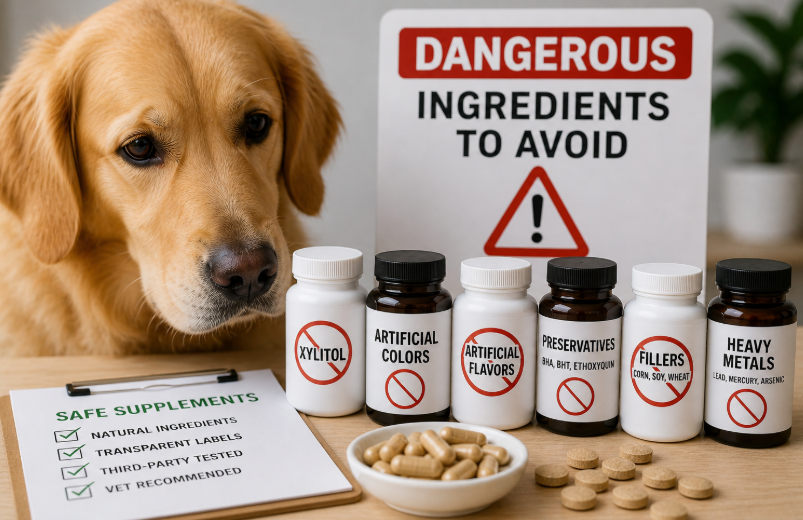
Many supplements include additives that serve little nutritional purpose. Artificial colors, for example, are often used to make products more visually appealing. However, they offer no health benefits and may trigger sensitivities in some pets.
Preservatives are another concern. Certain chemical preservatives can extend shelf life but may negatively impact your pet’s system. Therefore, choosing products with natural preservation methods is a safer option.
Fillers are also frequently used to bulk up products. These ingredients may reduce manufacturing costs, but they dilute the effectiveness of the supplement. In some cases, they can even cause digestive discomfort. Recognizing these dangerous pet supplement ingredients helps you avoid products that prioritize profit over quality.
Hidden Toxic Ingredients
Some of the most dangerous pet supplement ingredients are not immediately obvious. For instance, certain sweeteners used in human products can be extremely toxic to pets. Xylitol is a well-known example that can cause severe reactions even in small amounts.
Heavy metals are another hidden risk. Poor-quality sourcing or manufacturing processes can lead to contamination. Over time, exposure to these substances may affect organ function and overall health.
Additionally, some herbal ingredients can be harmful if used incorrectly. While natural does not always mean safe, understanding proper usage and dosage is crucial. This is why researching dangerous pet supplement ingredients thoroughly is so important.
Low-Quality Protein and By-Products
Protein is often included in supplements, but not all sources are beneficial. Low-quality protein or animal by-products can be difficult for pets to digest. Furthermore, these ingredients may not provide the nutrients your pet actually needs.
In some cases, unclear labeling makes it difficult to identify the source of the protein. Terms like “meat meal” or “animal derivatives” can be vague and misleading. Therefore, choosing supplements with clearly defined, high-quality protein sources is essential.
Avoiding these types of dangerous pet supplement ingredients ensures that your pet receives real nutritional value rather than unnecessary fillers.
Artificial Flavors and Sweeteners
To make supplements more appealing, manufacturers often add artificial flavors and sweeteners. While this may improve taste, it can introduce unnecessary risks. Some artificial sweeteners are not suitable for pets and may lead to serious health issues.
Even when sweeteners are not toxic, they can still disrupt digestion or contribute to weight gain. Therefore, it’s best to choose products that rely on natural flavoring methods instead.
By avoiding these dangerous pet supplement ingredients, you help maintain a cleaner and safer diet for your pet. Over time, this supports better overall health and reduces the risk of complications.
Excessive Vitamins and Minerals
While vitamins and minerals are essential, too much of a good thing can become harmful. Over-supplementation is a common issue that many pet owners overlook. High levels of certain nutrients can lead to imbalances and health problems.
For example, excessive calcium may affect bone health, while too much vitamin A can cause toxicity. Therefore, it’s important to follow recommended dosages and avoid combining multiple supplements without guidance.
Recognizing dangerous pet supplement ingredients includes understanding how nutrient levels impact your pet’s body. Balance is key, and more is not always better.
Poor Manufacturing Standards
Even if the ingredient list appears safe, poor manufacturing practices can introduce risks. Contamination, inconsistent dosages, and lack of quality control are all concerns. Therefore, choosing reputable brands is just as important as reviewing ingredients.
Products that undergo third-party testing offer an added layer of assurance. These tests verify that the supplement meets safety and quality standards. As a result, you can feel more confident in your choice.
Avoiding dangerous pet supplement ingredients also means avoiding unreliable production methods. Quality control plays a major role in ensuring product safety.
How to Read Labels Effectively
Learning how to read labels is one of the best ways to identify dangerous pet supplement ingredients. Start by examining the ingredient list carefully. Ingredients are typically listed in order of quantity, so the first few items are the most important.
Look for clear, recognizable names rather than vague descriptions. Transparency is a good indicator of quality. Additionally, check for any additives or preservatives that may not be necessary.
Understanding labeling terminology can also help you make better decisions. Terms like “natural” or “premium” are not always regulated, so they may not reflect actual quality. Therefore, focusing on the ingredient list itself is more reliable.
Safer Alternatives to Consider
Instead of focusing only on what to avoid, it’s helpful to consider safer alternatives. High-quality supplements use natural, well-researched ingredients that support specific health needs.
For example, omega fatty acids from fish oil can support skin and coat health. Similarly, glucosamine can help maintain joint function. These ingredients provide real benefits without unnecessary risks.
Choosing products with simple, transparent formulations reduces the likelihood of encountering dangerous pet supplement ingredients. Over time, this approach supports consistent and reliable results.
Building Confidence in Your Choices
It’s easy to feel overwhelmed when trying to avoid dangerous pet supplement ingredients. However, building confidence comes from knowledge and experience. The more you learn, the easier it becomes to identify safe and effective products.
Start by focusing on quality over quantity. A few well-chosen supplements are far more beneficial than multiple questionable ones. Additionally, consulting a veterinarian can provide valuable guidance.
Trust your observations as well. If your pet responds positively to a product, it’s a good sign. On the other hand, any negative reactions should prompt immediate reevaluation.
Conclusion
Avoiding dangerous pet supplement ingredients is one of the most important steps you can take to protect your pet’s health. While supplements can offer valuable support, not all products are safe or effective. By understanding ingredient labels, recognizing hidden risks, and choosing high-quality options, you can make informed decisions with confidence.
Ultimately, your goal is to support your pet’s well-being without introducing unnecessary risks. With a thoughtful approach, you can create a safe and effective routine that promotes long-term health and happiness.
FAQ
- What ingredients should I always avoid in pet supplements?
Avoid artificial sweeteners like xylitol, chemical preservatives, and unclear protein sources. - Are natural supplements always safe for pets?
Not always, as some natural ingredients can still be harmful if used incorrectly or in high amounts. - How can I tell if a supplement is high quality?
Look for transparent labeling, third-party testing, and clearly defined ingredient sources. - Can too many supplements harm my pet?
Yes, excessive supplementation can lead to imbalances and potential health issues. - Should I consult a veterinarian before giving supplements?
Yes, professional guidance helps ensure safety and proper usage based on your pet’s needs.