
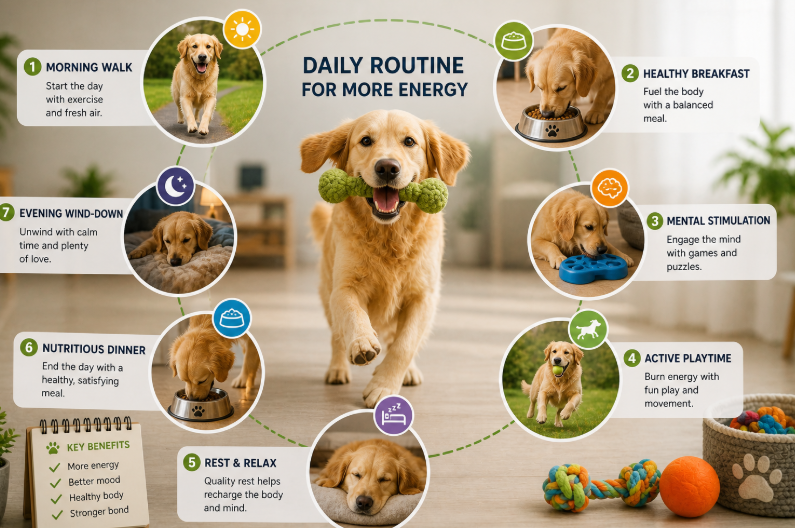
Creating a consistent pet energy routine is one of the most effective ways to support your pet’s overall vitality and happiness. While many pet owners focus on food and occasional exercise, daily structure plays an equally important role in maintaining energy levels. When you establish a thoughtful routine, your pet benefits from improved mood, better physical health, and more balanced behavior. Over time, these small daily habits can make a noticeable difference in how your pet feels and performs.
Pets thrive on predictability, and a well-planned pet energy routine gives them exactly that. It helps regulate their internal rhythms, supports digestion, and encourages consistent activity. As a result, your pet becomes more alert and engaged throughout the day. Instead of random bursts of energy followed by long periods of inactivity, they develop a steady and sustainable level of vitality.
Why Daily Structure Matters
Understanding why structure matters is the first step toward building a successful pet energy routine. Pets rely on cues from their environment to determine when to eat, play, and rest. Without a consistent schedule, they may feel restless or sluggish.
Daily routines provide clarity and stability. For example, feeding your pet at the same time each day supports digestion and prevents overeating. Similarly, scheduled play sessions encourage movement and reduce boredom. These small but consistent actions create a balanced lifestyle.
Additionally, a structured pet energy routine helps reduce stress. Pets that know what to expect tend to feel more secure. This sense of security translates into better behavior and improved emotional well-being.
Starting the Day with Movement
Morning activity sets the tone for the rest of the day. Incorporating movement into your pet energy routine early on helps wake up their body and mind. Even a short walk or light play session can stimulate circulation and increase alertness.
For dogs, a brisk walk provides both physical exercise and mental stimulation. Exploring new scents and environments keeps them engaged. For indoor pets, interactive toys or gentle play can achieve similar results.
Consistency is key. When your pet knows that morning movement is part of their routine, they begin to anticipate it. This anticipation creates excitement and encourages active participation.
Fueling Energy with Proper Nutrition
Nutrition plays a major role in any effective pet energy routine. The quality and timing of meals directly impact your pet’s energy levels. Feeding a balanced diet ensures that your pet receives the nutrients needed for sustained activity.
Instead of offering large, irregular meals, consider dividing food into smaller portions throughout the day. This approach helps maintain steady energy levels and prevents spikes and crashes. Additionally, choosing high-quality ingredients supports better digestion and nutrient absorption.
Hydration is equally important. Providing fresh water at all times ensures that your pet stays properly hydrated. This supports circulation, temperature regulation, and overall performance.
Midday Engagement and Mental Stimulation
As the day progresses, maintaining engagement becomes essential. A well-rounded pet energy routine includes mental stimulation alongside physical activity. This combination keeps your pet sharp and prevents boredom.
Interactive toys, puzzle feeders, or short training sessions can provide valuable mental exercise. These activities challenge your pet’s problem-solving skills and keep their mind active. As a result, they remain alert and engaged throughout the day.
Short bursts of activity are often more effective than long sessions. For example, a quick play session or a brief walk can refresh your pet’s energy without overwhelming them. This balanced approach supports both physical and mental well-being.
Balancing Activity and Rest
While activity is important, rest is just as essential in a pet energy routine. Pets need time to recover and recharge after periods of movement. Without adequate rest, energy levels can quickly decline.
Creating a comfortable resting area encourages your pet to relax. This space should be quiet, clean, and free from distractions. When pets feel safe and comfortable, they are more likely to rest properly.
Scheduled downtime also helps regulate energy levels. By alternating between activity and rest, you create a rhythm that supports sustained vitality. This balance prevents fatigue and keeps your pet feeling refreshed.
Evening Wind-Down and Light Activity
As the day comes to an end, your pet energy routine should shift toward relaxation. Light activity in the evening helps release any remaining energy while preparing your pet for rest.
A gentle walk or calm play session can be effective. These activities allow your pet to unwind without overstimulation. Additionally, maintaining a consistent evening schedule signals that it’s time to settle down.
Feeding dinner at a regular time also supports this transition. After eating, pets naturally become more relaxed, which makes it easier to establish a calm nighttime routine.
Adapting the Routine to Your Pet
Every pet is unique, so your pet energy routine should reflect their individual needs. Factors such as age, breed, and health condition all influence how much activity and rest your pet requires.
Younger pets often need more frequent activity, while older pets may benefit from gentler routines. Paying attention to your pet’s behavior helps you make the right adjustments. If they seem tired or uninterested, it may be time to modify the routine.
Flexibility is important, but consistency should remain the foundation. Even small adjustments can improve how well the routine works for your pet.
Tracking Progress and Making Improvements
Monitoring your pet’s response to their pet energy routine helps you refine it over time. Look for signs of improvement, such as increased energy, better mood, and smoother movement.
Keeping a simple record of daily activities can provide useful insights. For example, noting how your pet behaves after certain activities helps identify what works best. This allows you to make informed changes.
If progress seems slow, don’t be discouraged. Building a strong routine takes time. However, consistent effort leads to lasting results.
Long-Term Benefits of a Consistent Routine
Over time, a well-structured pet energy routine offers significant benefits. Pets that follow a consistent schedule tend to have better physical health and more stable energy levels. They are also less likely to develop behavioral issues related to boredom or stress.
Additionally, routines strengthen the bond between you and your pet. Spending regular time together through structured activities builds trust and connection. This enhances your overall relationship.
A consistent routine also makes it easier to identify changes in your pet’s health. When behavior patterns are predictable, any deviations become more noticeable. This allows for early intervention if needed.
Conclusion
Establishing a pet energy routine is one of the most practical ways to support your pet’s daily vitality. By combining structured activity, proper nutrition, and adequate rest, you create a balanced lifestyle that promotes long-term health. While the process requires consistency, the rewards are clear. Your pet becomes more energetic, engaged, and content.
Ultimately, a thoughtful routine transforms everyday care into a powerful tool for improving your pet’s quality of life. With patience and attention, you can build a routine that keeps your pet happy, healthy, and full of energy.
FAQ
- How long should a daily routine take for pets?
A routine can vary, but even short, consistent activities throughout the day can be highly effective. - Can I change my pet’s schedule often?
Small adjustments are fine, but maintaining consistency helps support stable energy levels. - What if my pet seems tired during activities?
Reduce intensity and allow more rest to ensure your pet stays comfortable and engaged. - Are mental activities as important as physical ones?
Yes, mental stimulation plays a key role in maintaining overall energy and preventing boredom. - How quickly will I see results from a routine?
Many pets show improvements within a few weeks when the routine is followed consistently.