
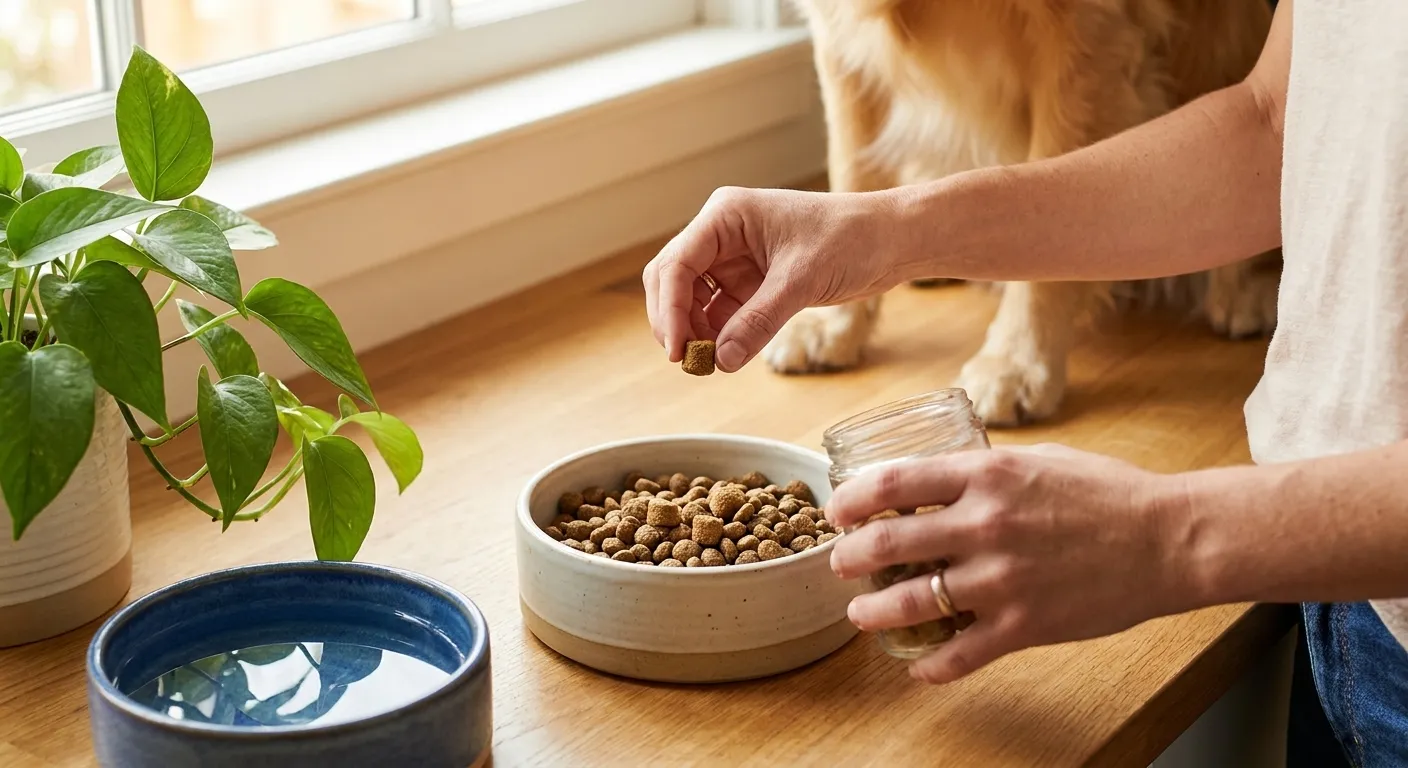
If your veterinarian recommends a product, a clear household routine can help you integrate pet supplements daily as instructed. The first question is whether the specific supplement is appropriate; the second is how to administer and record the agreed plan without confusion. This guide focuses on organization, label checks, and questions for the clinic rather than promising that every pet needs daily supplementation. It does not provide a dose or recommend a product. This is general educational information, not veterinary advice. Follow your veterinarian’s directions for your pet, including what to do when a dose is missed, refused, or possibly repeated.
Get the plan clear before creating a habit
Ask the veterinarian to identify the product, formulation, intended purpose, and exact administration instructions. Write down when the plan should be reviewed and whom to contact with questions. Do not copy a schedule from another pet, even one of the same species or similar size. If the clinic and package directions appear different, ask for clarification before proceeding. A reminder cannot solve an unclear instruction. The useful starting point is a plan you can describe accurately to another person who may care for your companion.
Bring information about the pet’s food, treats, medicines, and other supplements to the conversation. Use label photographs rather than relying on memory of a brand name. Ask whether the suggested product is necessary in the context of the whole feeding and care plan. The FDA’s explanation of complete and balanced pet food offers background on nutritional adequacy statements. That context belongs beside the individual assessment, not as a reason to add products automatically to any diet.
Match the item in your hand to the agreed product
Check the species, formulation, ingredient panel, stated amounts, and directions on the actual package. Confirm the product name and any variant with the veterinary instructions. A powder, chew, and liquid with similar branding may have different directions, so ask before substituting. Keep identifying information such as the lot and expiry details where supplied. If you cannot read the label clearly, obtain a legible copy from the manufacturer or clinic. Do not guess from the appearance of a container or a seller’s abbreviated listing.
Inspect the storage directions and choose a place that follows them while preventing accidental access by pets or children. Use the original packaging when needed to retain the instructions and identity. If the product requires a particular measuring device, ask the clinic which one to use and how. Do not replace it with an approximate household measure without clarification. A neat storage setup is useful only when it keeps the product and the directions connected. Avoid decanting several similar items into unmarked containers to simplify the shelf.
Choose a routine that follows the instructions
Use the timing and method agreed with the veterinarian, then connect the reminder to an existing household task if appropriate. The connection might be checking the care sheet at a usual meal preparation time, but it must not alter any product-specific directions. Ask whether food is involved and whether the whole amount must be consumed in a particular way. Keep the instruction visible at the point of administration. The goal is to make the agreed action easier to remember, not to invent a new schedule based on convenience.
Write a brief administration note with the product, instructions, responsible person, and contact route for uncertainty. A simple checkbox can record completion, but include the date and the relevant time if the plan needs it. Make clear that an unchecked box means the task is unconfirmed rather than permission to give another amount. If the record is ambiguous, contact the responsible person or clinic as appropriate before acting. A shared routine needs a way to distinguish something not done from something done but not recorded.
Coordinate everyone who cares for the pet
Assign one person to check the record before administering the product, and agree how another person takes over when needed. Explain the instructions directly to sitters or family members rather than assuming they will infer them from the package. Show where the record, original label, and veterinary contact are kept. Do not share personal details beyond what is needed for care. If the pet stays elsewhere, prepare a clear handover with the actual product and instructions rather than a vague message to give the usual supplement.
Include a plan for travel or changes in routine before they happen. Ask about storage, missed administration, and whether anything needs to be adjusted by the veterinary team. Do not independently combine doses or change timing to fit a journey. If several pets live together, keep their products and records distinguishable and confirm which animal consumed anything offered with food. An organized handover is particularly valuable when the person giving the product is not the one who attended the appointment. Keep questions open until the instructions are understood.
Plan for refusal without improvising
Ask the veterinarian what to do if your pet will not accept the recommended formulation. Describe the refusal accurately: did the animal avoid the food, leave the item, or consume an uncertain amount? Do not assume you can crush, dissolve, hide, or mix every product. Check the permitted method with the clinic or appropriate product instructions. If another form is suggested, confirm the specific formulation and directions. A palatable-looking substitute is not automatically the same plan, even if it appears to contain similar named ingredients.
Record an uncertain amount as uncertain rather than filling the gap with an estimate. Ask the clinic how to handle that situation and what information they need. Avoid turning administration into a distressing struggle without professional guidance. The routine should be reviewed if it is not manageable for you or your companion. A caregiver’s practical difficulty is relevant information for the veterinary team. You do not need to conceal it in order to appear consistent or responsible. A workable plan begins with an honest account of what actually happens at home.
Keep observations separate from health claims
Ask what observations the veterinarian wants recorded and when to report them. Note the date, context, and ordinary behavior using neutral wording. Do not label a change as proof that the supplement caused it, particularly when food, medicine, or routine also changed. Keep the administration record and observation record connected but distinct. One shows what was given under the plan; the other shows what you noticed. This distinction can make a follow-up conversation clearer without pretending your home log is a clinical trial.
If you are worried about a new sign or a possible product problem, contact the veterinary team promptly rather than waiting for the planned review to finish the log. Ask how they want packaging, photographs, and observations shared. Preserve the relevant product information if reporting is needed. Do not stop or change prescribed treatments based on a general article or comment thread. The AVMA pet-care resource page is another professional information starting point, while your own clinician provides the individual plan.
Review the routine instead of continuing by default
At the agreed follow-up, bring the product details, administration record, questions, and observations. Ask whether to continue, change, or stop the plan and whether the instructions need updating. If the formulation, pet’s diet, or other treatment changes, seek clarification about how that affects the arrangement. Do not let an automatic purchase renewal decide what the pet should keep receiving. A daily habit is useful when it remains connected to a reviewed purpose. Keep the latest instructions accessible and retire the old care sheet so caregivers do not follow conflicting versions.
Your next step
Confirm the product and instructions, prepare a shared record, and ask about missed or refused administration before the first uncertain day. Integrate pet supplements daily only when that is the plan your veterinarian has recommended for your companion. A clear routine should make care easier to coordinate and review, with questions resolved through the veterinary team rather than guesses added to the schedule.