
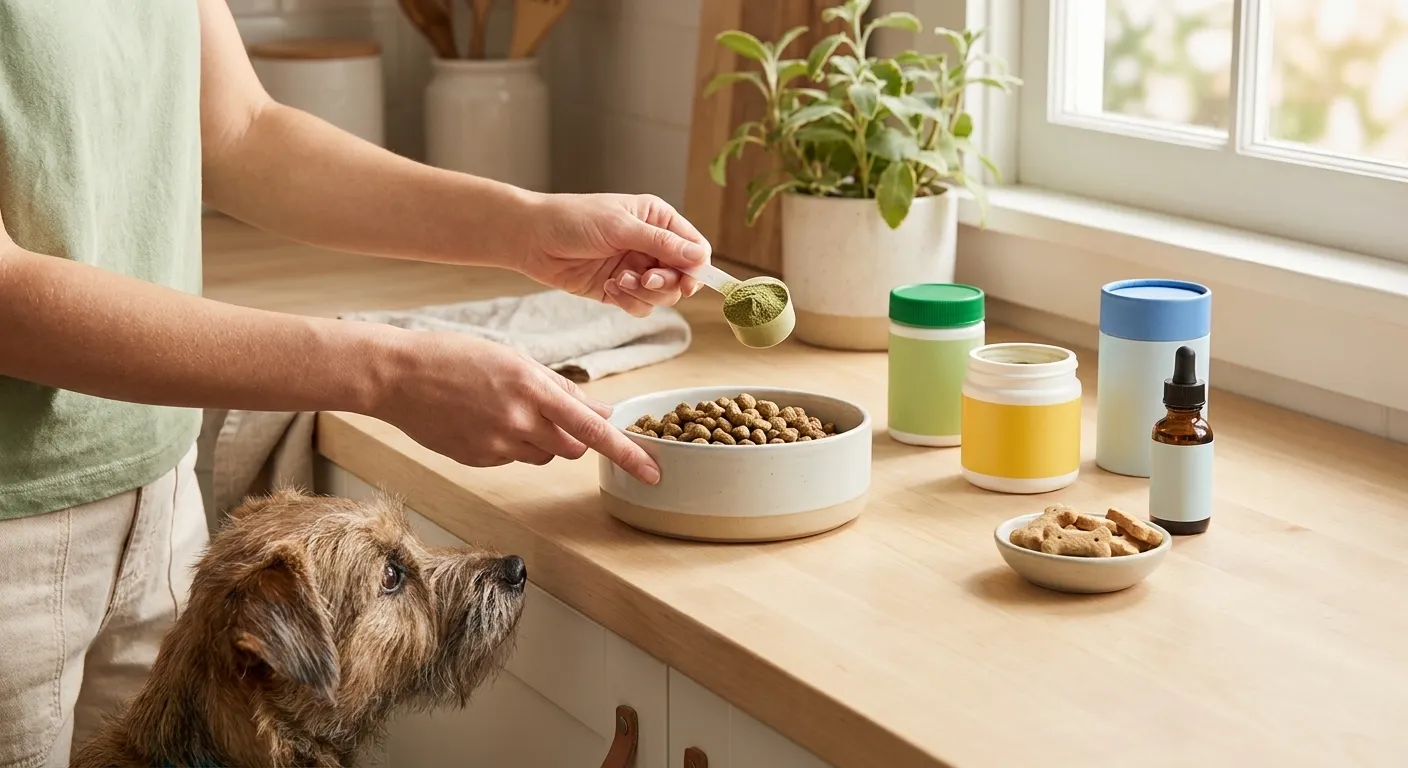
A pet supplement routine needs to remain clear when the ordinary day changes. A sitter, a trip, a new package, or a revised care instruction can expose gaps that a daily reminder does not address. This guide helps you organize a veterinarian-recommended product around the actual household process, including handoffs and review. It does not establish that every pet needs a supplement or that routine use guarantees lifelong wellness. This is general educational information, not veterinary advice. Confirm individual instructions with your veterinary team and contact them about concerns or uncertainty.
Begin with a current recommendation and complete inventory
Gather the exact main food, treats, medicines, and supplements, including items supplied by other caregivers. Bring labels and ordinary quantities where known to the veterinary discussion. Ask what purpose the proposed product serves and whether it belongs in the plan. The FDA’s complete and balanced pet-food explanation can help you read nutritional adequacy statements. It does not identify an individual supplement need from a label alone. Keep no addition and further clarification among possible next steps.
Before repeating a product, confirm its exact formulation, administration, storage, purpose, and review. Ask what to do about refusal, missed administration, or an uncertain amount. Do not copy another animal’s instructions. If part of the plan is unresolved, keep clarification separate from active care tasks. A routine can make an assessed recommendation easier to follow, but it cannot supply missing evidence or replace the team that knows the individual care situation.
Use a care card that survives a caregiver handoff
Create a concise card with the pet’s name, actual product, current instructions, where the label is stored, and the clinic contact process. Include the instruction date and review decision so an older copy is identifiable. Keep different animals’ cards separate. Avoid nicknames such as “joint chew” when more than one formulation could match. Ask the covering caregiver to locate the product and explain the process back to you. Clarify gaps before responsibility transfers instead of relying on a hurried verbal reminder.
Choose one place to record administration and explain what completed, not given, and uncertain entries mean in your household. Identify who normally gives the item and who covers an absence. If two people may be involved, make the checking step explicit. A phone alert is not evidence that administration happened. If the record is unclear, follow the clinic’s instructions for uncertainty. Do not ask a sitter to invent a response or infer that a second amount is appropriate because a checkbox is empty.
Prepare for travel without rewriting the care plan
Ask the veterinary team about any practical issue with the planned trip and the actual product. Check its storage and administration instructions before arranging a travel container. Preserve the formulation name and directions, and keep identifying package information available. Do not assume a product can be transferred, opened, mixed, or substituted solely because that would make packing easier. If the format is difficult to manage, ask for guidance rather than creating a new administration method from another owner’s suggestion.
Give the caregiver the current card, label information, record location, and appropriate clinic contact details. Explain how changes or concerns will be communicated. If travel disrupts the ordinary timing, ask the team how to handle that rather than improvising a schedule. Keep instructions accessible if the usual person is unavailable. The goal is continuity of the assessed plan with a clear path for questions, not a claim that the same routine must proceed regardless of the animal’s circumstances.
Handle a new package as an information check
Before adding a replacement package to the routine, compare the exact name, formulation, format, and directions with the item in the current care card. If anything relevant differs or is unclear, ask the clinic whether the existing recommendation still applies. Do not assume a seller’s similarly named replacement is interchangeable. Keep a photograph of the actual label and identifying information where available. This check is especially useful when the household buys from more than one source or another caregiver handles refills.
Record a formulation change as a change rather than quietly replacing the old description. If the team updates instructions, revise the card and any reminders that refer to it. Remove obsolete copies from the active care area while retaining dated history if useful. A recurring purchase should follow the recommendation, not determine it. The FDA’s regulatory explanation supplies U.S. context for animal products marketed as supplements; it does not make similarly marketed items identical.
Keep refusal and uncertainty visible
Ask in advance what to do if the pet refuses the product, only part is administered, or the amount is uncertain. Keep those instructions with the active card. Do not force a solution from this article, double an amount by default, or substitute a different product to preserve a streak. If the same difficulty repeats, contact the veterinary team about the practical problem. A routine should have a safe path to clarification, not require caregivers to hide an incomplete task because the checklist expects completion.
A hypothetical note might say, “Administration unclear; clinic guidance for uncertainty needed.” That note is a communication example, not a dosing instruction. Write what is known and what remains unknown. If the team asks for product or administration details, provide the actual label and record. Do not turn a refusal into a judgment about the pet or a reason to combine several unreviewed foods and products. The individual instructions determine the next step, including when to ask for help.
Use observations to support review, not prove effectiveness
Ask which observations the veterinarian wants and how to report a concern. Keep those notes separate from administration records. Include other food, medication, household, and care changes during the same period. A record that the product was given does not establish a benefit, and a changed observation does not identify its cause. Contact the clinic when worried rather than waiting for a completed log. A short descriptive note can be useful without becoming a home diagnosis or a promotional before-and-after story.
If photos or video are requested, ask how to collect them without provoking discomfort or distress. Label the date and context. Keep ordinary observations and unresolved questions visible rather than selecting only favorable material. Bring the exact product, instructions, administration record, and notes to the agreed review. Ask whether to continue, change, or stop. If the plan changes, update every place the household relies on for directions so the next handoff reflects the current recommendation.
Review the process after a disruption
After travel or a caregiver change, ask what was unclear in the instructions, product identification, or recording method. Fix the household process and bring care questions to the clinic. Name who will obtain any missing information and keep it out of active directions until clarified. Do not create an elaborate system just to conceal the same uncertainty. A practical routine is one that another responsible caregiver can follow and that can adapt when the veterinarian changes the assessed plan.
A practical next step
Build a pet supplement routine that preserves the exact recommendation through ordinary days, handoffs, replacement packages, and review. Keep one current care card, accurate records, and a clear route for questions. Repetition supports a household task only while that task reflects the current individual plan; it does not guarantee a long-term health outcome.