
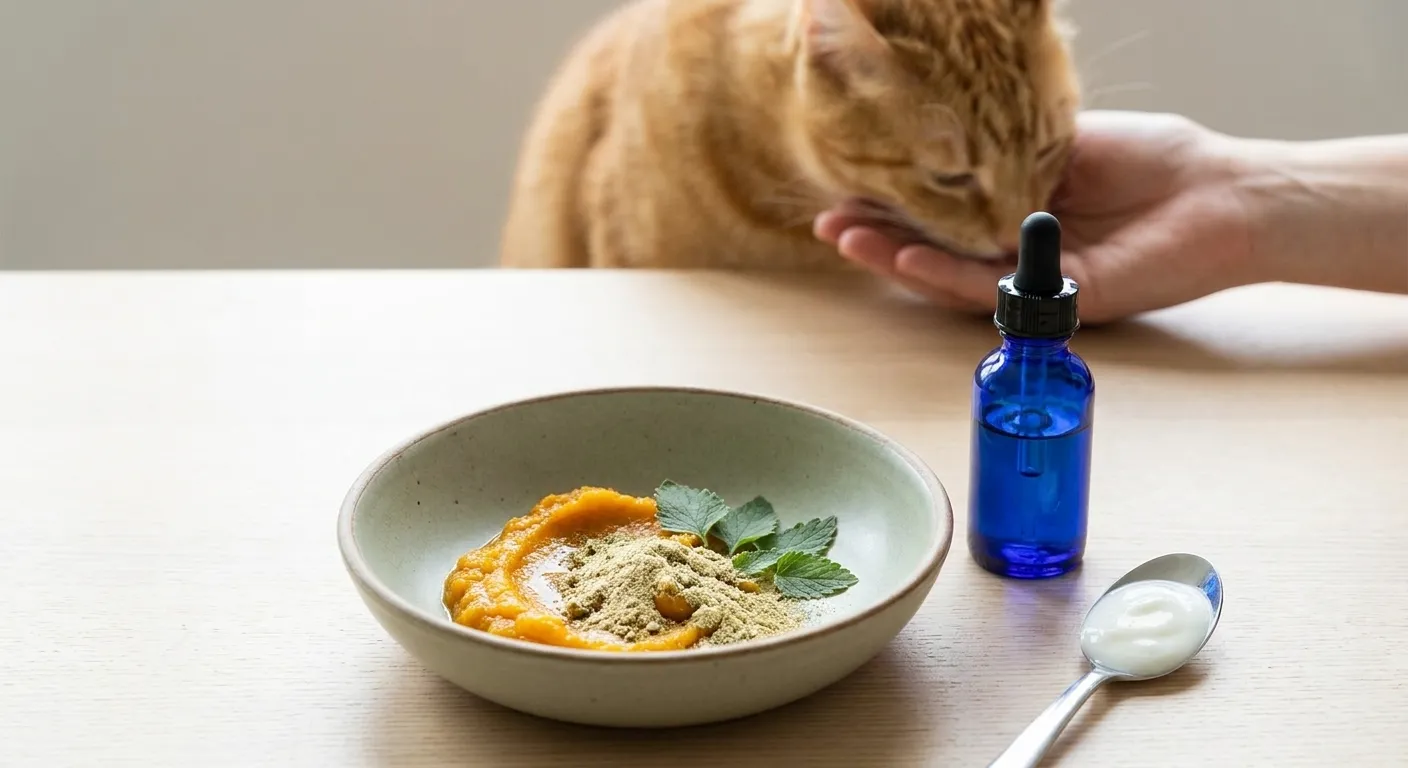
When researching cat digestive health ingredients, begin with your cat’s actual feeding and health question rather than selecting a category from a product label. Probiotics, prebiotics, enzymes, fiber, and other advertised components need the specific formulation and intended use reviewed. This guide helps you collect the right information and ask focused veterinary questions; it does not diagnose a digestive problem or provide a supplement dose. This is general educational information, not veterinary advice. Contact your veterinarian about concerning signs and do not postpone assessment while trying products or completing a home observation sheet.
Describe the concern and the feeding context
Write what you have observed, when it began, and any related routine changes you know about. Keep the note descriptive rather than diagnosing the cause. Record the main food, treats, additions, medicines, and other products with exact labels where possible. Ask the clinic what information is useful and how to share it. If you are concerned, contact the veterinary team promptly rather than waiting to gather a perfect record. Your first task is to make the question clear, not to find an ingredient that seems to match it.
Tell the veterinarian whether food or care instructions have recently changed and whether more than one person feeds the cat. Mark unknown amounts or dates honestly. If several cats live together, ask how to obtain useful information about the individual without creating distress or changing a care plan on your own. Do not treat a general digestive-support guide as a way to decide the explanation for a particular sign. The product discussion belongs within the assessment of the individual animal and the actual feeding routine.
Read the main food’s statement before adding a product
Bring a legible copy of the food label and ask how it fits the cat’s current needs. The FDA’s complete and balanced pet-food explanation provides background for understanding nutritional adequacy statements. Use that context to ask a clearer question rather than deciding that an unfamiliar ingredient list proves a nutritional gap. If the cat has a prescribed or specifically recommended diet, keep its purpose in the discussion before considering additions.
Prepare a short feeding record that distinguishes the main diet from treats and extra products. Do not make several changes simultaneously from a list of digestive ingredients in an article. Ask the veterinary team which action, if any, should come first and how it would be reviewed. A useful next step can be clarifying an existing feeding instruction or gathering further information. You do not need to choose a supplement merely because the concern is described with the word digestive.
Probiotic labels: request the identifying details
For a product marketed as a probiotic, copy the actual formulation and identifying information on the label rather than recording only the category name. Note the stated quantities, units, directions, storage, and manufacturer contact. Ask the veterinarian which details matter for the proposed use and whether the evidence relates to that specific product. Do not infer a universal benefit from the label. If the manufacturer supplies research, request the original source and keep it with the product note for the clinical discussion.
Check whether you have enough information to distinguish the proposed item from another package. Similar category words do not tell you whether the formulation, administration, or supporting evidence is the same. If a seller’s page differs from the label, resolve the discrepancy before use. Keep unanswered questions visible rather than filling them with claims from a review. The goal is to make the actual product easier for the veterinary team to assess, not to rank every probiotic from a marketing description.
Prebiotics and fiber: keep the whole diet visible
If a label describes a prebiotic or fiber component, copy the exact name and amount where provided. Ask what role the proposed item is intended to have in the cat’s current plan and what evidence supports that use. Do not assume a digestive category identifies the appropriate addition for every concern. Keep the main food and other products in the same record. The clinical question is about the individual animal and the specific formulation, not whether a broad ingredient category sounds beneficial in isolation.
Ask about preparation and administration only after the veterinarian has considered whether the item belongs in the plan. Do not infer an amount from another cat’s directions or use a household food as an equivalent without guidance. If the label is incomplete, request clarification from the manufacturer or clinic. Keep instructions attached to the exact product, especially if a later package describes a new blend. A consistent worksheet can show what changed without declaring that a new label necessarily represents an improved option for your companion.
Enzymes and other components: question the promised use
A digestive product may advertise enzymes or another named component. Record the claim as a claim and ask which problem it is intended to address. Do not treat the ingredient name as a diagnosis or a reason to add the product. Bring the full label and supporting material to the veterinary team. If a claim is based only on a mechanism or a testimonial, keep that separate from evidence about the proposed formulation and use. The clinician can explain the relevance and limits in the context of the cat’s assessment.
For U.S. regulatory background, consult the FDA’s explanation of animal food and drug regulation. Do not assume a human supplement label or category settles the question for a pet product. Regulatory context, manufacturing information, and clinical usefulness are distinct issues. Ask what a quality statement or test actually covers before treating it as assurance of a health benefit. Keep the next question specific enough to answer with documentation or a veterinary explanation.
If a product is recommended, organize its use
Ask for the exact item, formulation, purpose, instructions, and review plan. Clarify storage, whether food is involved, and what to do about refusal, missed administration, or an uncertain amount. Do not substitute a similar category or another format without checking. Prepare a shared household record if more than one caregiver is involved. Keep products and directions for different animals distinct. An administration reminder helps only when the plan is clear; it should not convert an unresolved product idea into a daily routine.
Ask what observations the team wants and how to report a concern sooner than the planned review. Record what you see in ordinary language without assigning a cause to every change. Include other feeding or care changes that happen during the same period. Do not deliberately prompt discomfort to collect evidence. A home note can support communication while still leaving uncertainty about why something changed. The plan should tell you where to seek help, rather than leaving you to interpret a seller’s promised response time.
Review the decision before continuing by default
Bring the label, directions, administration record, observations, and questions to the agreed follow-up. Ask whether the item should continue, change, or stop and whether the feeding plan needs clarification. If the formulation or another treatment changes, check how that affects the instructions. Keep the current decision accessible to everyone caring for the cat and remove obsolete copies that might conflict. An automatic reorder or an unfinished jar should not decide the ongoing plan. The useful choice is one tied to the reviewed purpose and individual guidance.
Your next step
Collect the cat’s feeding record and the actual product label, then ask the veterinary team what the proposed ingredient and evidence mean for the individual plan. Cat digestive health ingredients should prompt precise questions rather than automatic additions. Keep the formulation, instructions, and review connected, with no need to turn a broad digestive-support claim into a diagnosis or promised outcome.