
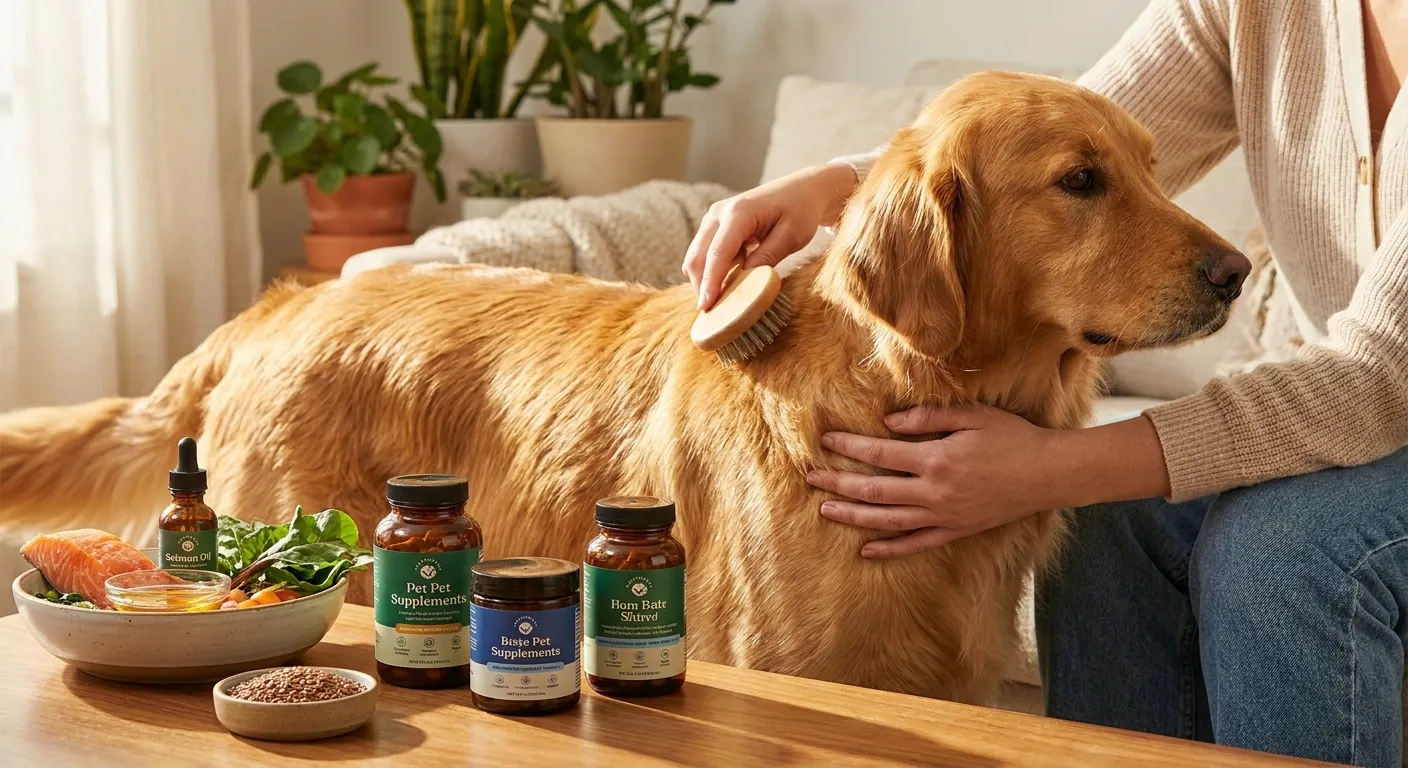
Pet skin and coat nutrients deserve a careful feeding discussion rather than a promise of a lustrous shine from one ingredient. If your pet has a skin or coat concern, describe what you see to your veterinarian before treating it as a nutritional gap. This guide provides a label worksheet and preparation steps for that conversation. It does not diagnose a condition, rank products, or supply a dose. This is general educational information, not veterinary advice. Contact your veterinary team about concerning changes and ask which assessment or care instruction should come first.
Start with the concern, not the supplement shelf
Write down the concern in ordinary language: what you noticed, when you first noticed it, and whether the appearance or behavior changed. Avoid translating a photograph into a diagnosis. Include recent food, grooming, household, and care changes without claiming which one caused the concern. Ask the clinic what observations or photographs would help. Do not make your pet uncomfortable to collect a better image. If you are worried, call before trying to finish the worksheet; a complete record is not a condition for seeking help.
Prepare a concise question such as, “Could we review the feeding plan alongside this coat change?” This keeps nutrition in the conversation without assuming it explains everything. Bring any previous instructions and the names of products already used. Tell the team if you have introduced a new item or changed a routine. Keep unknown dates and quantities marked as unknown. A veterinarian can assess the individual situation; an article cannot establish the reason for a skin concern from a list of possible nutrient roles.
Read the main diet before deciding an addition is needed
Photograph the food package, including its nutritional adequacy statement and feeding directions. The FDA explains how complete and balanced statements relate to pet-food nutritional adequacy. Use that background to ask whether the current diet fits your pet’s circumstances. Do not infer a deficiency simply because a coat-support product lists ingredients absent from the package front. A front-panel marketing phrase and a complete feeding assessment answer different questions.
Make a feeding inventory with the exact food, treats, toppers, oils, chews, medicines, and supplements. Include the ordinary amounts if you know them and how food is divided among caregivers. Ask the veterinary team whether any item overlaps with a proposed addition. If a prescribed or specifically recommended diet is involved, explain why it was chosen and ask how additions would fit that purpose. Keep the existing plan visible rather than replacing it with an ingredient checklist collected from advertising.
Protein and other nutrient words: avoid diagnosing from labels
A skin-and-coat page may highlight protein, amino acids, vitamins, or minerals. Copy the specific terms and ask what question they are intended to answer for your pet. Do not conclude that a more prominent word means the current diet lacks it. Ask the veterinarian whether assessment of the whole diet is needed and what information would support that assessment. Keep the quantity and unit attached to any number quoted by a seller. An ingredient name alone is not an individual nutritional recommendation.
Separate the product’s listed contents from its promised effect. In one column, write what the label actually identifies. In another, write the claim and the evidence supplied for that claim. A statement about coat appearance should remain a question until the relevant formulation and intended use are reviewed. Do not fill missing amounts with a value from another brand. If a manufacturer’s reply is unclear, save the reply and ask the clinic which detail is still needed before considering the product.
Oils and fatty-acid labels: compare the information supplied
For an oil or chew marketed around fatty acids, record the named source and the specific fatty acids the label identifies. Keep total oil quantity separate from any separately stated component quantities. Ask the veterinary team what information matters for the proposed purpose. Do not equate fish oil, a plant oil, and an unnamed blend solely because all appear under a coat-support category. The useful comparison is between complete labels and an individual care question, with no dose inferred from this guide.
Record the storage and preparation instructions, package size, formulation, and manufacturer contact. Ask what documentation is available for a quality statement and what it covers. Do not use a seal, photograph, or pleasant description as evidence of a guaranteed coat change. If you cannot determine which version of a product the seller describes, resolve that before discussing use. Label clarity helps the conversation; it does not remove the need to assess whether that particular product belongs in the plan.
Review health claims in their proper context
The FDA’s animal-food labeling page explains the distinction between food purposes and claims that indicate an intended drug use. It also directs individual pet-health questions to a veterinarian. Read this as U.S. regulatory context rather than a product recommendation. Do not assume a coat supplement is approved to treat a particular condition because its advertising uses clinical language. Ask what the actual documented claim is and how it relates to your pet.
Request the original evidence when a seller cites research. Check whether the material concerns the actual formulation, species, and proposed use rather than merely mentioning a similar ingredient. Keep a testimonial separate from a study or veterinary assessment. You need not settle the entire literature at home. Bring the source and specific question to the clinic. If the product page does not provide support for a claim, do not rewrite the missing evidence as an established fact in your own notes.
Turn a recommendation into clear household instructions
If the veterinarian recommends a product, request the exact item, formulation, purpose, administration instructions, and review plan. Clarify what to do about refusal, missed administration, or uncertainty over whether another person gave it. Do not substitute a product from the same category without checking. Keep instructions for each animal separate and make one current care sheet available to everyone involved. A simple record can show what was administered without becoming a reason to continue indefinitely.
Ask what observations to record and how to report a concern sooner than the planned review. Use neutral notes about appearance, behavior, and other care changes rather than declaring that an ingredient produced every improvement. Ask whether photographs are useful and how to collect them without distress. Keep product and batch information with the record where available. At follow-up, ask whether to continue, change, or stop, and remove old instructions if the plan changes. Do not let an automatic reorder decide the next step.
Keep the worksheet useful at follow-up
Before the next discussion, gather the original concern, food labels, product information, instructions, and dated observations. Highlight unanswered questions rather than presenting a polished success story. If the food, product formulation, or other care has changed, mark that clearly. Ask which element of the current plan should be reviewed first. A short, accurate summary is more useful than a long collection of claimed benefits. The goal is an assessed feeding and care decision that remains understandable to your household and veterinary team.
A practical next step
Use pet skin and coat nutrients as a focused discussion topic: describe the concern, show the entire feeding routine, and bring the actual proposed label. Follow the individual assessment and ask how any recommendation will be reviewed. A useful next step is a clear question and a complete record, with no promise that a particular nutrient will create a shiny coat.