
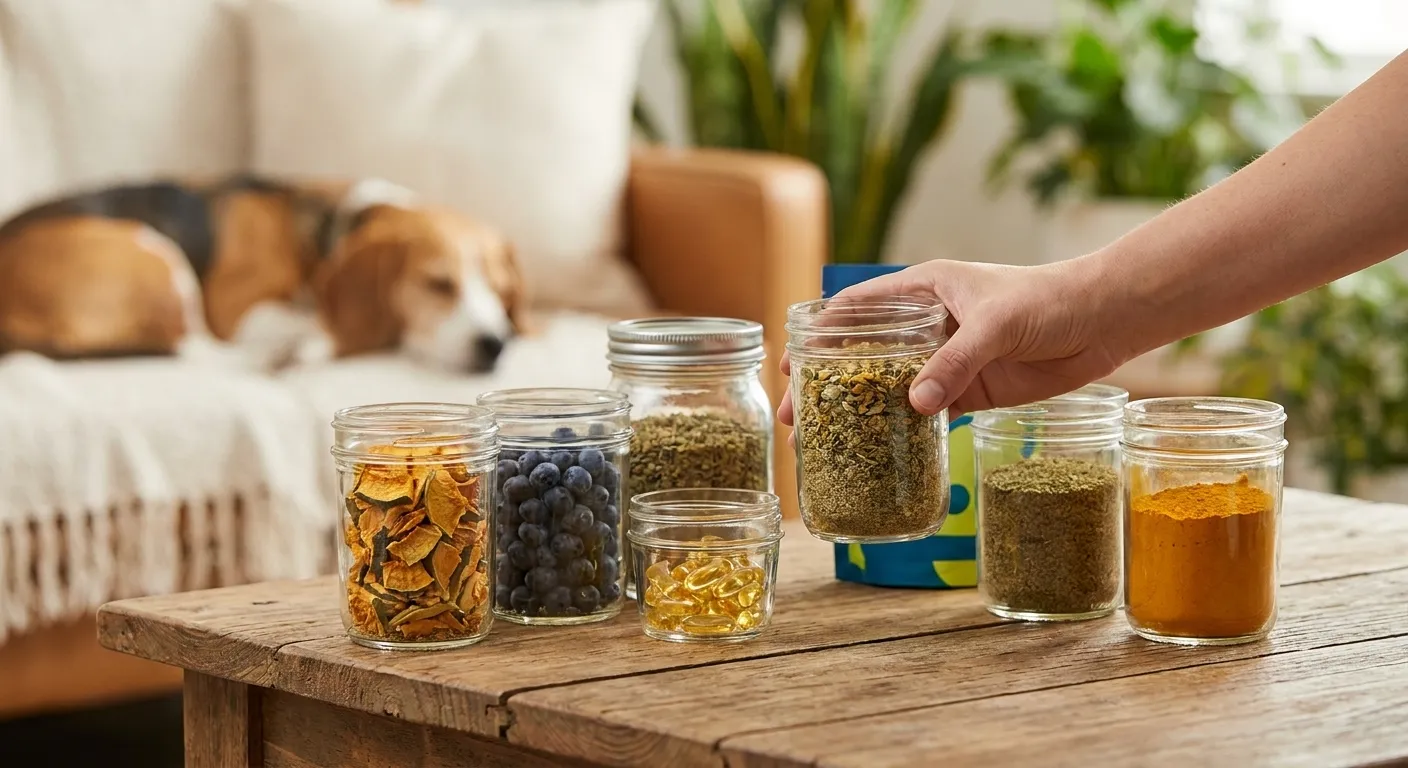
Choosing wisely about a pet supplement starts with a veterinary recommendation, not a label. The ingredients printed on a jar describe a product; they do not describe your individual animal. This guide is about the process that keeps a choice careful and checkable: begin from the assessed plan, build one ingredient care sheet, read the label as a match check rather than a verdict, turn every unfamiliar ingredient into a written question, and review the whole thing at the next veterinary conversation. It does not establish that any supplement is safe or necessary for a particular pet. This is general educational information, not medical advice, and not a substitute for veterinary advice; no administration amount is provided here. Confirm individual decisions with your veterinary team and contact them about any concern or uncertainty.
Begin with a veterinary recommendation and a complete inventory
Gather what your pet already receives — the main food, treats, medicines and any supplements, including items another caregiver gives — and bring that list, with labels where you have them, to the veterinary team. Ask what purpose a proposed supplement would serve and whether anything needs to change at all. A label cannot identify an individual need from its ingredient list, and a reassuring descriptor on a jar is not a finding about your pet. Keep “no addition” and “ask again at the next visit” among the real possible outcomes of the conversation.
Before repeating a product, confirm its exact formulation, administration, storage, purpose and review step with the clinic. Ask what to do about a refusal, a missed administration or an uncertain amount. Do not copy another animal’s instructions, even when the household owns a similar pet. If part of the plan is unresolved, keep that question separate from the active care tasks. A clear routine can make an assessed recommendation easier to follow, but it cannot supply missing evidence or replace the team that knows the individual situation.
Build one ingredient care sheet a second person can follow
Put the pet’s name and the exact product at the top of one page. Add the veterinarian’s current instructions, where the label is kept, the agreed review step and how to contact the clinic. Use the complete formulation name, because two products can share a nickname such as “joint chew” while differing in what they contain. Record the date of the instruction so an older printout is identifiable later. The sheet should let a sitter or a family member see what is actually in use without relying on memory.
Keep unresolved ingredient questions in a clearly separate “to ask” note rather than among the active directions. If another person cannot explain the plan back to you, the wording is unclear — find it and ask the clinic to clarify. Keep one current version accessible and retire conflicting copies after a change. A tidy care sheet is useful because it preserves the recommendation and the exact ingredients while cutting the searching and guessing out of a busy day.
Read the label as a match check, not a verdict
Use the label to confirm you have the right product, not to decide whether the product is good. Check the exact name, the formulation, the format and the directions against what the clinic recommended. Similar names can mean different contents, so a matching brand name is not enough. If a detail differs or is unclear, make clarification the next task instead of assuming the items are interchangeable. A label answers “is this the assessed product?” — it does not answer “is this ingredient suitable for my pet?”
Keep one current copy of the label with the care sheet. When you are unsure whether what you have matches the recommendation, bring both to the veterinary team rather than deciding from the packaging alone. The label is an identifying document and a source of questions; it is not a substitute for the assessment behind the plan.
Turn each unfamiliar ingredient into a written question
When an ingredient name is unfamiliar, copy it onto the “to ask” note and raise it with the clinic rather than deciding for yourself what it implies. A descriptive or appealing name is not a ranking, and it does not tell you whether the ingredient suits your animal, in what amount, or alongside a current medicine. Ask what the term describes and whether it matters for your pet’s situation. Treat any list of “preferred” or “clean” ingredients you have read elsewhere as a set of questions to put to the veterinary team.
Write the question so it can be answered, not just noted. Instead of “is this ingredient OK?”, the useful form is something like: “This jar lists an unfamiliar term in the middle of the ingredient panel; does it change anything for a pet already taking the medicine we discussed?” That wording gives the clinic the product, the position of the ingredient and the context it needs. A short, specific question is more useful at a veterinary conversation than a general worry, and a pattern in what you keep asking about is itself information the clinic can work with.
Keep “other ingredients” visible without judging them yourself
Beyond the ingredients the product is bought for, a supplement may contain substances that help it keep its form, taste or shelf life. Their presence is not automatically a problem, and their absence is not automatically a benefit; what matters is whether the actual product fits the confirmed format and your pet’s plan. If the list is long or includes a term you do not recognize, write it down as a question rather than treating it as a conclusion. Record the whole list with the care sheet so the team can see exactly what is being used.
Watch for label claims that need a veterinary conversation
If a label presents a product as treating, curing or preventing a disease, treat that wording as a prompt to raise the question with your veterinary team before purchase, rather than as a reason to buy or to avoid on your own. A supplement used alongside a diagnosed condition sits inside a treatment plan, not outside it. The same applies to wording that promises a specific result or a fixed timeframe — ask the clinic how it relates to the actual recommendation for your animal, and keep the marketing separate from the plan.
Handle a refill or a reworded label as an information check
A refill, a new package or a reworded label is a moment to check, not to assume. Compare the item you received against the version on the care sheet. If anything relevant differs or is unclear, ask the clinic whether the existing recommendation still applies rather than deciding from the packaging. Do not assume a similarly named replacement is interchangeable. Keep a photograph of the actual label where you can, and record a formulation change as a change rather than quietly replacing the old description.
If the team updates the recommendation, revise the care sheet and any reminders that refer to it, and retire the obsolete copies from the active area. A recurring purchase should follow the recommendation rather than decide it. This small check is what keeps the ingredient list on the sheet honest about what is really being given.
Review the choice at the next veterinary conversation
At the agreed review, bring the product, its label, the current instructions and your “to ask” note. Ask whether to continue, change or stop, and raise the questions you set aside while the product was in use. A changed observation does not identify its cause, and a completed record does not establish that a product helped, so keep observations separate from the administration log and let the team interpret them. If the plan changes, update every place the household relies on for directions so the next handoff reflects the current recommendation.
A practical next step
Choosing wisely is a process rather than a single label check: begin with a veterinary recommendation, build one care sheet a second person could follow, use the label to confirm the right product, turn every unfamiliar ingredient into a written question, and review the choice whenever the product or the instructions change. Read the FDA’s complete and balanced pet-food explanation for how the nutritional-adequacy statement on the main diet is worded, and keep supplement decisions with the team that knows your animal. Read the whole label, ask before you assume, and review the choice each time something changes.