
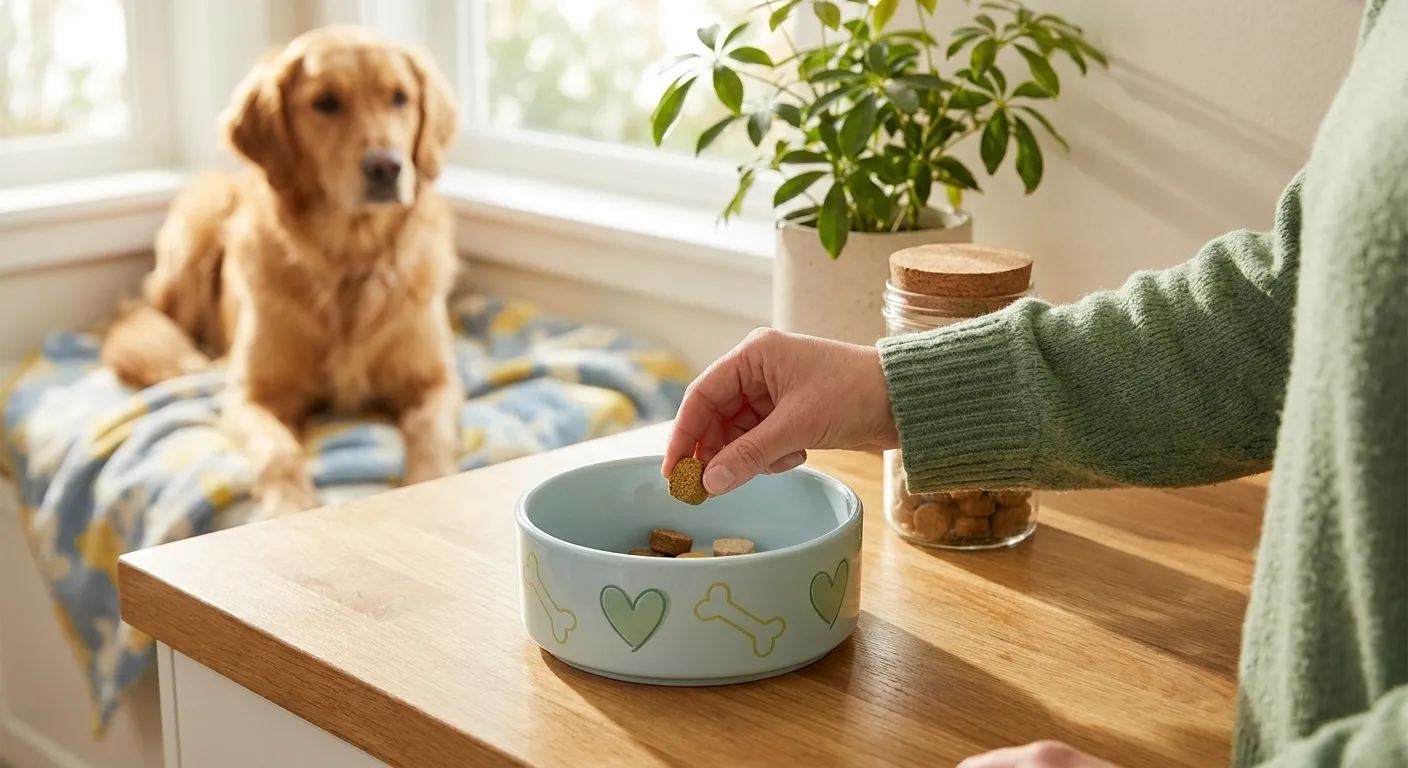
Long-term pet health supplements should remain connected to a reviewed individual purpose rather than a promise of a thriving life from repeated use. A product decision can become harder to follow when care instructions, caregivers, or formulations change. This guide helps you preserve clear records and revisit the recommendation over time without assuming every pet needs an addition. This is general educational information, not veterinary advice. Ask your veterinarian about current needs and contact the team about concerning changes; no dosing instruction, response timeline, or longevity benefit is supplied here.
Give the current plan an explicit purpose
Ask the veterinary team what the proposed product is intended to address for your pet and what evidence is relevant. Keep the exact formulation and intended use with the answer. Do not substitute a broad wellness phrase for a clear question. If the purpose remains unresolved, make clarification the next step rather than treating an earlier purchase as proof of need. No addition, another care priority, or further assessment should remain possible outcomes of an individual discussion.
Describe any concern in ordinary language and bring prior instructions. Mark what has changed since the earlier conversation, including food, medicines, products, routine, or household care. Do not diagnose a cause from a seller’s list of potential benefits. If you are worried about a new observation, contact the clinic rather than waiting for a routine product review. Long-term organization should make the current situation visible; it should not lock the animal into a plan simply because that plan has been followed before.
Keep the whole feeding and care inventory current
Record exact labels for the main diet, treats, additions, medicines, and supplements. Include items administered by another caregiver and note ordinary quantities where known. The FDA explains complete and balanced pet-food nutritional adequacy statements. Use that context to ask about the existing feeding plan, not to infer a gap from an advertised nutrient. Preserve the purpose of a specifically recommended diet when discussing any new addition.
Date the inventory and update it when something actually changes. Keep unknown information marked as unknown and obtain a current package image where useful. Do not copy forward an old formulation description merely because the brand name is unchanged. Ask the team whether proposed additions overlap with products already given. A complete record can support assessment without establishing that any item causes a particular outcome. The inventory is a communication tool, not a measurement of how proactive the household is.
Preserve evidence in its documented scope
Request original references if a manufacturer cites research. Record what formulation or ingredient, species, purpose, and outcome the source actually concerns where you can verify those details. Ask the veterinarian how closely it relates to the proposed use. Do not extend a limited observation into a lifelong effect or a guarantee of healthy aging. Keep testimonials, composition information, mechanisms, and outcome studies as different types of material. Each answers a narrower question than a broad promise of vitality.
For U.S. context, consult the FDA’s explanation of animal products marketed as supplements. Do not assume human supplement terminology determines an animal product’s regulatory category or validates its outcome claims. Ask for the precise meaning and official reference behind an approval statement. Keep documentation questions separate from individual suitability. A long period of household use does not itself supply evidence missing from a product page.
Use one active instruction sheet and retain dated history
The active sheet should identify the pet, exact product, formulation, purpose, veterinarian’s instructions, storage, review plan, and clinic contact process. Keep it concise enough for another caregiver to use. Retain dated history if helpful, but make obsolete instructions clearly separate from the active plan. When the team changes directions, revise every reminder or household record that refers to the old version. Do not rely on memory to distinguish a previous recommendation from the current one.
Ask about refusal, missed administration, partial use, and uncertain amounts. Keep those answers with the active directions rather than asking a caregiver to improvise. Do not substitute a similar format or product without checking. If the instructions themselves are unclear, contact the veterinary team before turning them into a recurring task. A household record should preserve the recommendation faithfully while providing a practical route for questions. It should not reduce important information to a vague phrase such as “give the usual supplement.”
Treat formulation changes as a review question
When replacing a package, compare the actual name, ingredients, stated quantities, format, and directions with the current plan. If relevant information changes or is unclear, ask whether the earlier recommendation still applies. Keep identifying label information available. Do not let a retailer’s replacement suggestion become an assumed clinical equivalent. A brand can offer multiple products, and a category label does not identify the complete formulation. The review question should concern the item actually supplied.
Record any change alongside the instruction date and notify other caregivers of the current version. If the veterinarian recommends a new item, document its purpose and instructions as an updated decision rather than silently editing the old name. Keep subscriptions and refills attached to that decision. An automatic reorder can simplify purchasing only while it reflects the current plan. It should not determine which formulation the animal receives or whether a product continues indefinitely.
Keep observations useful without assigning a cause
Ask the team what observations to record and how to report concerns. Write what you see in ordinary language and include other food, medication, or care changes during the same period. A home log can support conversation while leaving uncertainty about why something changed. Do not create a validated-sounding health score from a personal checklist. If photos or video are requested, ask how to collect them without prompting discomfort or distress. Contact the clinic when concerned rather than waiting for a perfect record.
At review, include unresolved questions and practical difficulties, not just favorable observations. Bring the product, instructions, administration record, and any source material the clinician asked to see. Ask whether the purpose still applies and whether to continue, change, or stop. Do not interpret an uneventful period as proof that a supplement prevented every possible problem. The review should address the actual current plan and evidence, with no need to create a dramatic success story to justify a prior purchase.
Make the next review decision easy to find
After the conversation, write the current recommendation and identify any information still needed. Assign responsibility for obtaining a missing label or contacting the clinic. Share the active instructions with all caregivers and remove conflicting copies from the care area. Keep the continuing decision separate from whether there is product left in the container. A clear record helps the household adapt when the plan changes, while preserving the uncertainty and individual context that broad long-term marketing claims tend to omit. Ask a covering caregiver to find the active record before a handoff and clarify any uncertainty together.
A practical next step
Organize long-term pet health supplements around a current individual purpose, exact formulation, clear instructions, and explicit review. Keep the whole feeding plan visible and reassess changes with the veterinary team. Accurate records can help a household follow guidance over time without promising longevity or making repetition itself a reason to continue.