
Keeping your pet mentally engaged is just as important as physical exercise, and pet brain health activities play a crucial role in supporting long-term well-being. While many pet owners focus on walks and feeding schedules, mental stimulation often gets overlooked. However, a lack of mental engagement can lead to boredom, stress, and even behavioral issues. Therefore, introducing simple daily activities can make a significant difference in your pet’s cognitive health.
Just like humans, pets need challenges to keep their minds active. When you incorporate pet brain health activities into your routine, you help improve memory, focus, and overall behavior. Over time, these small efforts create a more balanced, confident, and happy pet.
Why Mental Stimulation Matters
Understanding the importance of mental stimulation helps you appreciate the value of pet brain health activities. Pets rely on their senses and instincts to explore the world, and without proper engagement, they may become restless or disengaged.
Mental stimulation supports cognitive development and slows down age-related decline. Additionally, it helps reduce anxiety by giving pets a sense of purpose. When pets are mentally active, they are less likely to develop destructive habits caused by boredom.
Moreover, engaging your pet’s mind strengthens your bond. Shared activities create positive interactions that build trust and communication. As a result, your pet becomes more responsive and connected to you.
Simple Games That Make a Difference
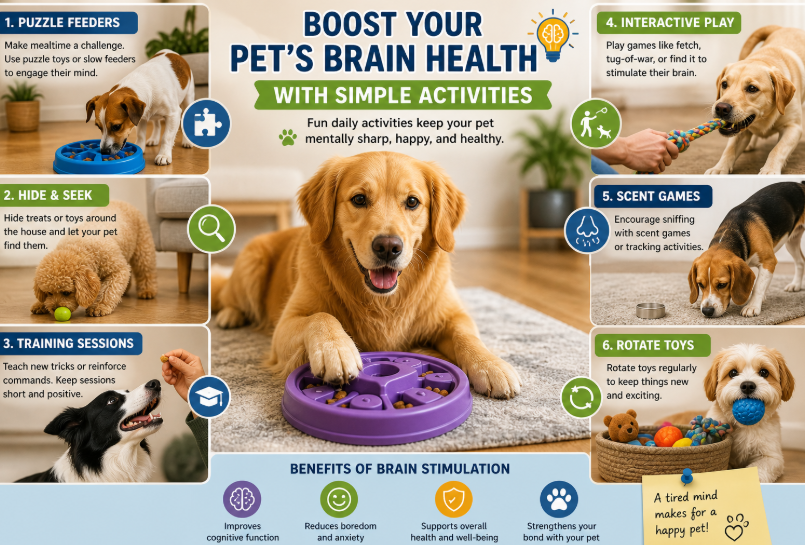
You don’t need complex tools to introduce pet brain health activities. In fact, simple games can be highly effective. For example, hide-and-seek encourages your pet to use their senses and problem-solving skills. Hiding treats or toys around the house can turn an ordinary day into an exciting challenge.
Another easy option is interactive play. Games like fetch with variations or tug-of-war require focus and coordination. While these may seem physical, they also engage the brain by requiring attention and decision-making.
Rotating toys regularly also helps. When pets encounter something new or reintroduced, it stimulates curiosity. This keeps their environment interesting without requiring constant purchases.
Training as Mental Exercise
Training sessions are one of the most effective pet brain health activities. Teaching new commands or reinforcing existing ones challenges your pet’s memory and concentration. Even short sessions can provide significant mental benefits.
Consistency is important, but variety keeps things engaging. Introducing new tricks or changing the training environment adds complexity. This prevents your pet from becoming bored with repetitive tasks.
Positive reinforcement also plays a key role. Rewarding your pet for success encourages participation and builds confidence. Over time, this creates a positive learning experience that benefits both you and your pet.
Using Food for Enrichment
Food-based enrichment is another powerful way to incorporate pet brain health activities. Instead of simply placing food in a bowl, you can turn mealtime into a stimulating experience. Puzzle feeders and slow feeders encourage pets to work for their food.
This approach not only engages the mind but also slows down eating, which supports digestion. Additionally, it mimics natural foraging behavior, giving your pet a sense of accomplishment.
You can also create simple DIY challenges. For instance, placing treats inside a folded towel or a safe container encourages problem-solving. These activities are easy to set up and highly effective.
Adapting Activities for Different Pets
Every pet is unique, so pet brain health activities should match their personality and abilities. High-energy pets may enjoy more complex challenges, while calmer pets may prefer gentle stimulation.
Age also plays a role. Younger pets often need more frequent engagement, while older pets benefit from slower-paced activities. Adjusting the level of difficulty ensures that your pet stays comfortable and interested.
Observing your pet’s reactions helps guide your choices. If they seem frustrated, the activity may be too difficult. On the other hand, if they lose interest quickly, it may be too easy. Finding the right balance is key.
The Role of Routine and Consistency
Consistency enhances the effectiveness of pet brain health activities. When these activities become part of your daily routine, your pet begins to expect and enjoy them. This anticipation creates excitement and engagement.
However, routine does not mean repetition. While consistency is important, varying the activities keeps things fresh. Rotating different types of challenges ensures that all aspects of your pet’s mind are stimulated.
Even short sessions can be beneficial. Spending just a few minutes each day on mental stimulation can lead to noticeable improvements over time.
Combining Physical and Mental Stimulation
While mental engagement is important, combining it with physical activity creates a well-rounded approach. Many pet brain health activities naturally involve movement, which enhances their effectiveness.
For example, obstacle courses encourage both physical coordination and problem-solving. Similarly, interactive games that require chasing or retrieving stimulate both body and mind.
This combination helps burn energy more efficiently. As a result, pets are more relaxed and satisfied after activities. This balance also reduces the likelihood of behavioral issues.
Recognizing Signs of Improvement
As you incorporate pet brain health activities, you may notice positive changes in your pet’s behavior. Increased focus, improved responsiveness, and reduced boredom are common signs of progress.
Pets may also show more curiosity and enthusiasm during activities. This indicates that their minds are actively engaged. Additionally, improved confidence often leads to better social interactions.
Tracking these changes helps you understand what works best. Over time, you can refine your approach to maximize benefits.
Long-Term Benefits for Your Pet
The long-term impact of pet brain health activities extends beyond daily enjoyment. Regular mental stimulation supports cognitive function as pets age. This can delay or reduce the effects of cognitive decline.
Additionally, mentally active pets tend to be more adaptable. They handle changes in environment or routine more easily. This resilience contributes to overall well-being.
Strong mental health also supports physical health. When pets are engaged and happy, they are more likely to stay active and maintain a healthy lifestyle.
Conclusion
Incorporating pet brain health activities into your pet’s daily routine is a simple yet powerful way to enhance their quality of life. By providing consistent mental stimulation, you support cognitive function, reduce boredom, and strengthen your bond. These activities do not require complex tools or significant time—just a thoughtful approach and a willingness to engage.
Over time, the benefits become clear. Your pet becomes more focused, confident, and content. Ultimately, investing in your pet’s mental well-being leads to a happier and healthier life for both of you.
FAQ
- How often should I engage my pet in mental activities?
Daily short sessions are ideal, as consistency helps maintain cognitive engagement. - Are puzzle toys necessary for brain stimulation?
No, simple games and DIY challenges can be just as effective. - Can older pets still benefit from mental exercises?
Yes, gentle activities help maintain cognitive function and reduce decline. - What if my pet loses interest quickly?
Try rotating activities or adjusting difficulty to keep them engaged. - Do mental activities replace physical exercise?
No, both are important and work best when combined for overall health.