
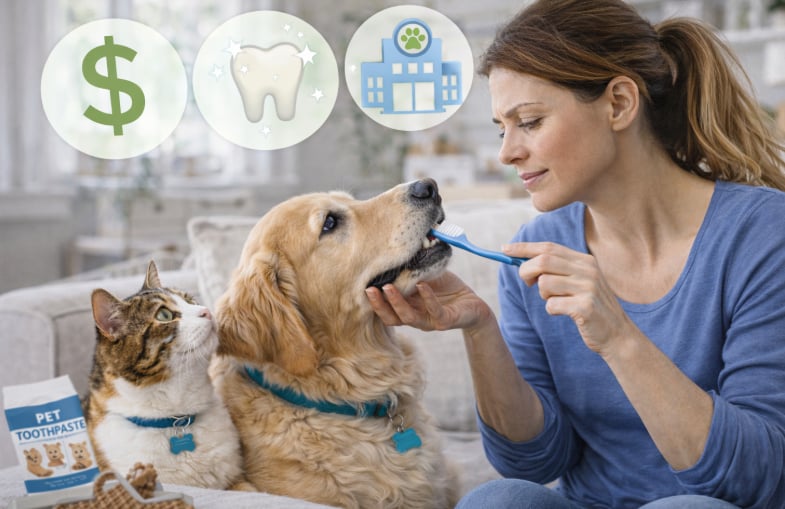
Pet dental care tips are often overlooked, yet they play a major role in your pet’s overall health and long-term expenses. Many pet owners focus on feeding, exercise, and grooming, but dental health tends to be ignored until a problem appears. Unfortunately, by that time, the issue may already require professional treatment. However, by following simple daily habits, you can prevent many common dental problems and avoid expensive vet visits.
When you understand how important oral health is, it becomes clear why pet dental care tips matter. Dental disease does not just affect the mouth. It can lead to infections, pain, and even issues with vital organs if bacteria spread. Therefore, taking action early helps protect your pet’s well-being and keeps your budget under control.
Why Dental Health Impacts More Than Just Teeth
Many people assume that dental care is only about keeping teeth clean. In reality, oral health affects the entire body. When plaque builds up, it turns into tartar, which can lead to gum disease. Over time, this can cause infections that enter the bloodstream.
This is why pet dental care tips are essential for long-term health. Healthy gums and teeth reduce the risk of serious conditions that require costly treatment. In addition, pets with good dental health tend to eat better and stay more active. This improves their quality of life while reducing the chances of frequent vet visits.
Moreover, dental problems often develop silently. Pets rarely show obvious signs until the condition becomes severe. By following consistent care routines, you can prevent these hidden issues from progressing.
Daily Brushing Makes The Biggest Difference
One of the most effective pet dental care tips is regular brushing. While it may seem challenging at first, it becomes easier with practice. Brushing removes plaque before it hardens into tartar, which is much harder to remove.
Start slowly by introducing your pet to the toothbrush and toothpaste. Use products designed specifically for pets, as human toothpaste can be harmful. Gradually increase brushing time as your pet becomes more comfortable.
Consistency is key. Even brushing a few times a week can significantly improve oral health. Over time, this habit reduces the need for professional cleanings, which can be expensive. Therefore, daily brushing remains one of the most valuable pet dental care tips you can follow.
Choosing The Right Dental Products
Not all dental products are created equal. When selecting items, it is important to focus on quality and effectiveness. Dental chews, toys, and water additives can all support oral health when used correctly.
These products complement brushing and make dental care easier. For example, chewing helps reduce plaque buildup while keeping your pet engaged. However, they should not replace brushing entirely. Instead, they work best as part of a complete routine.
When used wisely, these tools enhance your pet dental care tips strategy. They provide additional support and help maintain clean teeth between brushing sessions.
Recognizing Early Warning Signs
Even with good habits, it is important to watch for signs of dental problems. Early detection can prevent small issues from becoming serious. Common signs include bad breath, red gums, and difficulty eating.
Bad breath is often the first indicator. While mild odor is normal, strong or persistent smell may signal infection. Red or swollen gums also suggest inflammation, which can worsen if ignored.
By staying alert, you can respond quickly. This is one of the most practical pet dental care tips because it allows you to act before problems escalate. Early action often means simpler and less expensive treatment.
The Role Of Diet In Dental Health
Diet plays a significant role in maintaining healthy teeth. Certain foods help reduce plaque, while others may contribute to buildup. Dry kibble, for example, can help clean teeth as your pet chews.
On the other hand, soft or sticky foods may increase plaque accumulation. Therefore, balancing your pet’s diet is essential. Including dental-friendly options supports your overall routine and strengthens your pet dental care tips approach.
Additionally, providing fresh water helps wash away food particles and bacteria. Hydration supports oral health and reduces the risk of dental issues. Simple changes in diet can make a noticeable difference over time.
Professional Cleanings And When They Matter
While home care is essential, professional cleanings still play a role. However, they should not be the first line of defense. Instead, they act as a backup when needed.
Regular vet check-ups help monitor dental health and catch issues early. If a cleaning is required, it will likely be less intensive and less costly when combined with good daily care. This balance ensures that your pet dental care tips remain effective without relying solely on professional treatment.
In addition, early intervention reduces the risk of advanced procedures. These procedures can be expensive and stressful for both you and your pet. Preventative care keeps these situations to a minimum.
Building A Routine That Works
Consistency is the foundation of successful dental care. A simple routine that fits your schedule is more effective than a complicated plan you cannot maintain. Start with basic habits and build from there.
For example, brushing a few times a week, providing dental chews, and checking your pet’s mouth regularly creates a strong routine. Over time, these actions become part of your daily life.
By sticking to these pet dental care tips, you create a system that supports long-term health. This routine reduces stress and ensures your pet receives consistent care.
Avoiding Common Dental Care Mistakes
Many pet owners unintentionally make mistakes that lead to dental problems. One common issue is skipping brushing because it seems difficult. However, avoiding this step allows plaque to build up quickly.
Another mistake is relying only on dental treats. While helpful, they cannot replace brushing. A complete approach is necessary for effective care.
Ignoring early signs is also a frequent problem. Waiting too long to address issues often results in more complex treatment. By following pet dental care tips consistently, you avoid these mistakes and maintain better control over your pet’s health.
Long-Term Savings And Health Benefits
Investing time in dental care leads to significant savings. Preventing problems reduces the need for treatments, medications, and procedures. Over time, these savings add up and make a noticeable difference.
Healthy teeth also improve your pet’s overall well-being. They can eat comfortably, stay active, and enjoy daily life without pain. This creates a better experience for both you and your pet.
In addition, good oral health supports longevity. Pets with fewer health issues tend to live longer and happier lives. By following pet dental care tips, you provide lasting benefits that go beyond cost savings.
Conclusion
Pet dental care tips are a simple yet powerful way to prevent expensive vet visits and protect your pet’s health. By focusing on daily habits, choosing the right products, and staying consistent, you can avoid many common dental problems. While it may take some effort to build a routine, the long-term rewards are worth it. In the end, maintaining your pet’s oral health not only saves money but also ensures a happier and healthier life for your pet.
FAQ
- How often should I brush my pet’s teeth?
Brushing several times a week is ideal, but even a few sessions weekly can improve dental health. - Can dental treats replace brushing?
No, treats support oral care but should be used alongside brushing for best results. - What are signs of dental problems in pets?
Bad breath, red gums, and difficulty eating are common warning signs. - Are professional cleanings always necessary?
They are helpful when needed, but regular home care reduces how often they are required. - What is the easiest way to start dental care?
Begin slowly with brushing and introduce dental products to build a simple routine.