
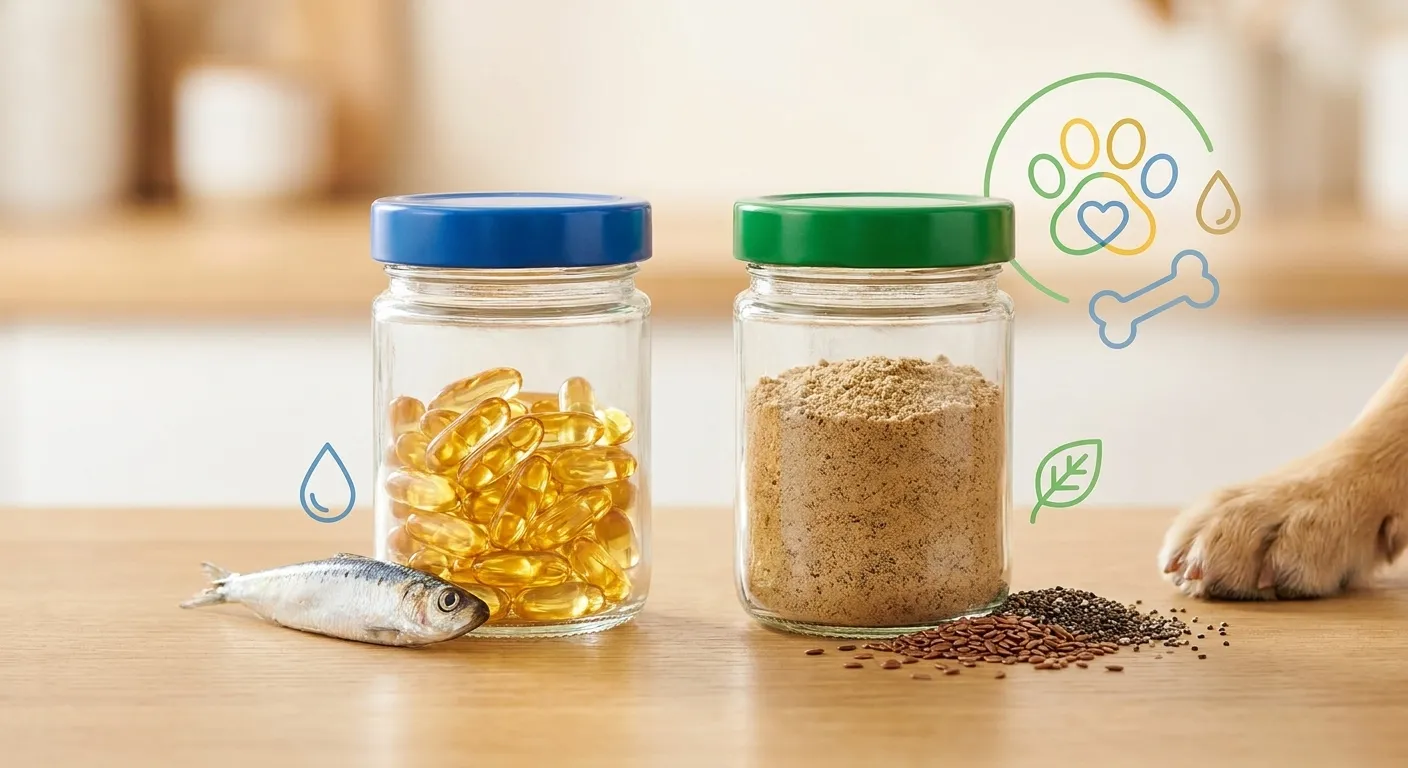
Choosing the best omega 3 for dogs is a question about the individual dog, the proposed purpose, and the actual formulation. A fish-oil label and a plant-source label may supply different information; neither should be chosen from a category name alone. This comparison guide helps you prepare a side-by-side worksheet and veterinary questions without ranking brands or giving a dose. This is general educational information, not veterinary advice. If you are researching oils because of a health concern, seek veterinary assessment rather than making a product trial your first diagnostic step.
Define what the comparison needs to answer
Write one question before browsing: “Does my dog’s plan call for an omega product, and if so which formulation and instructions?” Bring the current food, treats, medicines, and supplements to that conversation. Ask the veterinarian what purpose is being considered and what evidence would support it. If there is no established reason to add an item, comparing bottle designs will not answer the missing question. The appropriate outcome can be no addition, further assessment, or a specific recommendation within the existing plan.
Keep the claimed purpose separate from the source. A seller may position an oil for skin, joints, or general wellness, but a source name does not establish every claimed effect. Copy the exact claim and supporting reference into your notes. Avoid turning a broadly described nutrient function into proof that one product will help your dog. The comparison should identify what is known about the particular item, what remains unclear, and which question you need the clinician to answer.
Fish oil and plant sources: record the named fatty acids
Use three separate fields for the names commonly seen on these labels: ALA, EPA, and DHA. Do not copy a total omega figure into all three fields. A published comparison study of fish, krill, and flaxseed sources in dogs distinguishes EPA/DHA-containing marine sources from flaxseed’s ALA contribution. That distinction is useful for reading labels; the study does not establish that every commercial product or dog should receive the same supplement. Ask which component matters for the proposed purpose.
For each candidate, copy only the amounts and units actually supplied by its label. If the label gives total oil but not the component information you need, mark the missing field and request clarification. Do not infer EPA or DHA content from the word fish or assume that every plant-derived formulation is equivalent to flaxseed. Identify the exact named source and formulation. Keep source categories broad enough to avoid mislabeling a product while making the information gaps easy to see.
Build a fair side-by-side label worksheet
Create columns for product name, source, format, stated components, quantity per stated serving, directions, storage, and manufacturer contact. Copy the label’s own serving definition without treating it as your dog’s individual dose. A number per capsule and a number per liquid serving cannot be compared until their definitions are clear. Ask the veterinary team to interpret the relevant quantities for the dog’s plan. This worksheet organizes information; it should not become a self-prescribing calculator.
Record whether you have the current package or only a seller’s photograph. If the online description differs from the package, identify which formulation is being offered and obtain a clear label. A blend may contain additional ingredients that deserve review alongside the oil. Bring all of them into the comparison instead of focusing solely on the front-panel omega claim. Mark unknown information explicitly. A complete, modest label can be easier to assess than an elaborate page that leaves the proposed quantity unclear.
Compare documentation, not promises of superiority
Ask what a claimed test covers, which product or batch it concerns, and who performed it. Keep the actual document with the label if supplied. Do not treat a generic quality badge as proof of effectiveness for your dog’s concern. If a seller provides research, request the original reference and ask whether the formulation and intended use match the proposed item. Separate a composition measurement from an outcome claim. Both may be relevant questions, but neither automatically settles the other.
The FDA describes the U.S. framework for animal products marketed as supplements. Human supplement terminology should not be assumed to determine a pet product’s regulatory category. Use that context to question unclear approval claims rather than choosing a brand on that phrase. Ask the veterinarian how the documented formulation and evidence relate to your individual dog. No regulatory summary in this article provides a universal fish-versus-plant winner.
Fit the format to a confirmed plan
Once a specific product is recommended, ask how it should be administered and stored. Discuss whether liquid, capsule, or another format is appropriate for the household and the instructions. Do not open, crush, mix, or substitute a format on your own to make it seem easier. Ask what to do if the dog refuses it, an amount spills, or administration is uncertain. Keep the label and clinic instructions together so a practical difficulty leads to clarification rather than an improvised replacement.
For a liquid, use the measuring approach supplied or confirmed by the veterinary team; do not infer an amount from a casual household spoon. For any format, make a shared record if more than one person gives it. Store the item according to the actual instructions and keep it separate from products for other animals. A format that sounds convenient in a review may not fit your household’s care process. Compare practicality only after the purpose and formulation have been addressed.
Discuss cost after confirming the relevant item
Ask for the exact recommended product and instructions before assessing affordability. Copy current package prices if you are comparing permitted options, but do not treat the largest bottle as the best value without understanding the plan. Ask the clinic whether a less complicated option or no additional item would address the actual question. Avoid projected savings from future health outcomes. A purchase worksheet can record the amount you would spend, what is known about use, and which decisions remain unresolved.
If a subscription is offered, keep it separate from the care decision. Ask when the plan will be reviewed and avoid arranging continued delivery simply because checkout encourages it. Check how you would change or cancel an order under the seller’s actual terms. Do not substitute a cheaper similar-looking product without consulting the team. The useful cost comparison concerns appropriate options within an individual recommendation, not a promise that one oil will reduce future veterinary expenses.
Review before calling a source the best
At follow-up, bring the exact label, administration record, observations requested by the clinician, and any other care changes. Ask whether the product should continue, change, or stop. Record the answer and keep the household instructions current. If a formulation changes, ask whether the previous recommendation still applies. Do not assign an improvement to one source merely because it was introduced recently. “Best” should remain a practical judgment about a reviewed individual plan, supported by clear information rather than a universal ranking.
A practical next step
Compare fish and plant products by their named components, full formulation, documentation, and fit with the veterinarian’s instructions. The best omega 3 for dogs cannot be established from a source name or total-oil figure alone. Bring a clear worksheet to the clinical conversation and let the assessed purpose determine whether there is an appropriate addition at all.